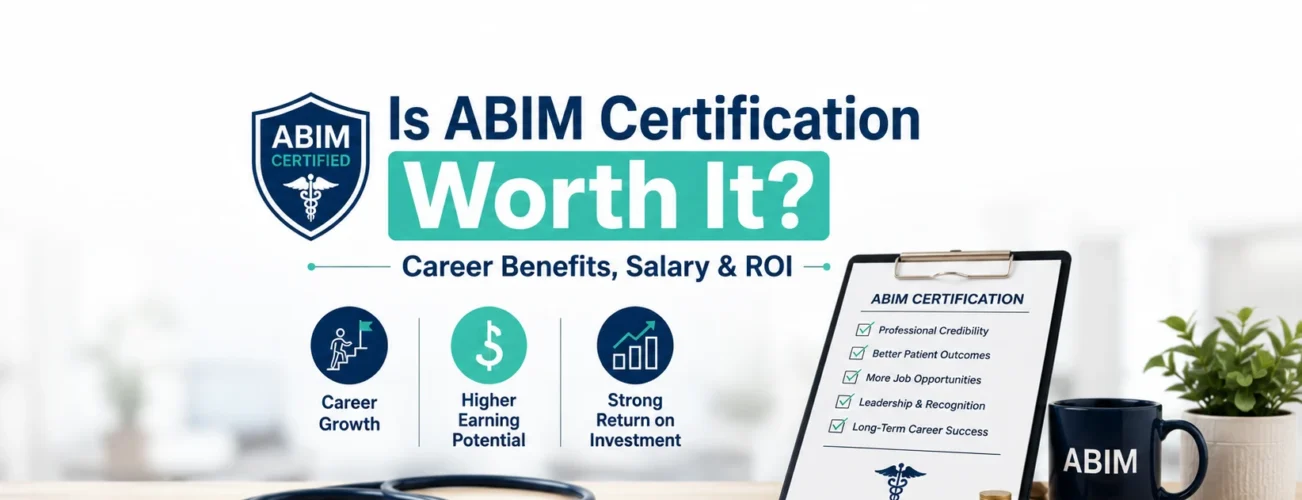
For many physicians completing residency or advancing their careers in internal medicine, earning certification from the American Board of Internal Medicine (ABIM) is a major professional milestone. However, preparing for the examination requires a significant investment of time, effort, and dedication, leading many candidates to ask an important question: Is ABIM certification really worth it?
For most physicians, the answer is yes. Board certification demonstrates that you’ve met nationally recognized standards of knowledge and clinical competence in internal medicine. Beyond personal achievement, it can strengthen your professional reputation, improve employment opportunities, and reinforce patient confidence in your expertise.
That said, the value of ABIM certification extends beyond simply adding another credential after your name. It represents a long-term investment in your medical career, one that may influence job opportunities, leadership roles, hospital privileges, and lifelong professional development.
In this guide, we’ll examine the career benefits of ABIM certification, its potential impact on salary and advancement, situations where certification is especially valuable, and factors to consider before deciding whether to pursue it.
In This Article You’ll Learn
- ✔ What ABIM certification demonstrates
- ✔ Career benefits of becoming board certified
- ✔ How certification may affect earning potential
- ✔ Why employers value board-certified physicians
- ✔ Situations where certification provides the greatest advantage
- ✔ Whether the investment is worthwhile for your career goals
What Does ABIM Certification Represent?
ABIM certification is more than passing a comprehensive examination. It signifies that a physician has demonstrated the knowledge, clinical judgment, and professionalism expected for independent practice in internal medicine.
Throughout the certification process, physicians validate their ability to evaluate complex medical conditions, interpret diagnostic findings, apply evidence-based treatments, and make sound clinical decisions across a broad spectrum of adult medicine.
For employers, healthcare organizations, and patients, board certification serves as an additional indicator of professional commitment and clinical excellence.
Why Many Physicians Choose to Become Board Certified
Although certification may not be legally required for every internal medicine position, many physicians pursue it because of the professional opportunities it can create throughout their careers.
Common reasons include:
- Demonstrating advanced clinical knowledge.
- Strengthening professional credibility.
- Improving competitiveness in the job market.
- Meeting employer or hospital expectations.
- Supporting future subspecialty opportunities.
- Enhancing patient confidence.
- Demonstrating commitment to lifelong learning.
For many physicians, these benefits continue long after the examination has been completed.
Career Benefits of ABIM Certification
Board certification often plays an important role in long-term career growth. Healthcare organizations frequently consider certification when evaluating candidates for clinical positions, leadership opportunities, academic appointments, and specialized practice settings.
| Career Benefit | How It Helps |
|---|---|
| Professional credibility | Demonstrates nationally recognized competence |
| Employment opportunities | May strengthen applications for competitive positions |
| Hospital privileges | Often supports credentialing requirements |
| Leadership roles | Can enhance qualifications for supervisory positions |
| Academic medicine | May support teaching and faculty opportunities |
| Patient confidence | Reinforces trust in professional expertise |
While individual employers have different hiring requirements, certification is widely recognized as a valuable professional credential across healthcare systems.
Can ABIM Certification Increase Salary?
One of the most frequently asked questions concerns earning potential. Although board certification does not automatically guarantee a higher salary, it may contribute to greater earning opportunities depending on factors such as geographic location, employer policies, years of experience, subspecialty training, and practice setting.
Many healthcare organizations prefer or require board-certified physicians for certain positions, which may expand the range of available career opportunities over time.
Rather than viewing certification as a direct salary increase, many physicians consider it an investment that can strengthen long-term career progression.
Career InsightBoard certification often creates opportunities that may not be immediately reflected in salary alone. Increased professional recognition, expanded career options, and greater eligibility for leadership positions can provide lasting value throughout your medical career.
How Employers View Board Certification
Healthcare employers frequently seek physicians who demonstrate a commitment to maintaining high professional standards. Board certification can provide additional reassurance that a physician has successfully completed a nationally recognized assessment of knowledge and clinical competence.
Although hiring decisions always consider multiple factors—including experience, communication skills, professionalism, and references—board certification often strengthens an applicant’s overall profile.
For physicians seeking positions at large hospitals, academic medical centers, multispecialty groups, or healthcare systems, certification may provide an additional competitive advantage during recruitment.
Real-World Example: Dr. Williams Expanded His Career Options
After completing residency, Dr. Williams accepted a position at a community hospital while preparing for the ABIM Certification Exam. Once he became board certified, he found that additional employment opportunities became available, including positions within larger healthcare organizations and opportunities to participate in teaching and quality improvement initiatives.
Although certification wasn’t the only factor influencing his career growth, it strengthened his professional profile and gave him greater flexibility when exploring future opportunities.
Certification Is an Investment in Your Future
Preparing for the ABIM examination requires discipline and commitment, but many physicians view the process as an investment rather than an expense. The knowledge gained during preparation often improves clinical confidence, reinforces evidence-based decision-making, and supports better patient care throughout a physician’s career.
If you’re actively preparing for board certification, our guide on effective first-attempt strategies for the ABIM exam explains practical study methods, preparation techniques, and proven habits that can help you approach exam day with greater confidence.
Does ABIM Certification Improve Career Opportunities?
One of the greatest advantages of ABIM certification is the flexibility it can provide throughout your medical career. While experience, communication skills, and clinical performance remain essential, board certification is often viewed as evidence of professional excellence and a commitment to maintaining high standards of patient care.
Many physicians discover that certification expands their options when applying for positions with hospital systems, academic institutions, multispecialty physician groups, and healthcare organizations that value board-certified clinicians.
Certification may also support future career transitions, whether you’re interested in leadership, medical education, hospital medicine, or pursuing additional fellowship training.
Professional Advantages Beyond Compensation
Although many physicians initially focus on salary, the long-term value of certification often extends well beyond financial considerations.
| Professional Benefit | Long-Term Value |
|---|---|
| Professional credibility | Strengthens your reputation among colleagues and employers |
| Patient confidence | Provides reassurance regarding clinical competence |
| Career mobility | Creates additional employment opportunities |
| Leadership potential | Supports advancement into supervisory positions |
| Academic opportunities | May improve eligibility for faculty appointments |
| Professional development | Encourages lifelong learning and evidence-based practice |
For many physicians, these professional advantages continue to provide value throughout decades of clinical practice.
Is the Time Investment Worth It?
Preparing for the ABIM Certification Exam requires dedication. Between residency responsibilities, patient care, and personal commitments, finding consistent study time can be challenging.
However, many physicians report that the preparation process itself strengthens their clinical reasoning, refreshes foundational medical knowledge, and improves confidence when managing complex patient cases.
Rather than viewing preparation solely as studying for an examination, consider it an opportunity to reinforce the knowledge and decision-making skills that support better patient outcomes every day.
Professional PerspectiveThe value of board certification is often measured over an entire career—not just during the months leading up to the examination. The knowledge, confidence, and professional recognition gained through certification continue to benefit many physicians long after exam day.
Who Benefits Most from ABIM Certification?
Although board certification is valuable for most internal medicine physicians, certain professionals may experience even greater career advantages.
- Residents entering independent practice.
- Physicians seeking hospital-based positions.
- Candidates pursuing academic medicine.
- Physicians planning future subspecialty fellowships.
- Clinicians interested in leadership or administrative roles.
- Doctors working in highly competitive healthcare markets.
For these physicians, certification may strengthen professional qualifications while opening additional opportunities for long-term career growth.
Common Misconceptions About ABIM Certification
Myth 1: Certification Only Matters Early in Your Career
In reality, board certification continues to provide professional value throughout a physician’s career, particularly when seeking new positions or leadership opportunities.
Myth 2: Passing the Exam Is All That Matters
The preparation process itself reinforces evidence-based medicine, improves diagnostic reasoning, and refreshes important clinical knowledge that benefits everyday patient care.
Myth 3: Only Academic Physicians Need Board Certification
Board-certified physicians practice successfully in community hospitals, private practices, large healthcare systems, outpatient clinics, and academic medical centers alike.
Myth 4: Certification Guarantees Higher Income
Compensation depends on numerous factors, including specialty, geographic location, employer, experience, and practice type. Certification should be viewed as one factor that may strengthen long-term earning potential rather than a guaranteed salary increase.
Preparing Successfully Makes the Investment More Valuable
The return on your investment increases when you’re well prepared before exam day. A structured study plan, regular self-assessment, and realistic practice questions help maximize your chances of passing on your first attempt while reducing unnecessary stress.
If you’re ready to strengthen your preparation, working through board-style ABIM practice questions can help you evaluate your readiness, improve clinical reasoning, and become more comfortable answering the types of scenarios commonly encountered on the certification examination.
Board Certification Is About More Than Passing an Exam
Ultimately, ABIM certification reflects a physician’s commitment to clinical excellence, lifelong learning, and high-quality patient care. While the credential itself is valuable, the knowledge and professional growth developed during preparation often become equally important benefits.
For physicians considering certification, the question is rarely whether the examination requires effort—it certainly does. The more meaningful question is whether that effort contributes to a stronger, more versatile medical career. For many internists, the answer is a resounding yes.
How to Maximize the Value of Your ABIM Certification
Earning ABIM certification is only the beginning of your professional journey. The physicians who gain the greatest long-term value from certification continue investing in their clinical knowledge, remain engaged with evidence-based medicine, and actively pursue opportunities for professional growth.
Board certification demonstrates your commitment to excellence, but maintaining that reputation requires continuous learning throughout your career.
Consider these strategies after becoming board certified:
- Stay current with updated clinical guidelines and recommendations.
- Participate in continuing medical education (CME).
- Seek leadership opportunities within your organization.
- Mentor residents and early-career physicians.
- Participate in quality improvement initiatives.
- Develop expertise in areas of special clinical interest.
- Maintain a habit of reviewing current medical literature.
These activities complement your certification and contribute to ongoing professional development.
Should Every Internal Medicine Physician Become Board Certified?
Career goals vary from one physician to another, so there is no universal answer. However, for many internists, board certification provides meaningful professional advantages throughout their careers.
Certification may be particularly valuable if you plan to:
- Work within large healthcare systems.
- Practice in academic medicine.
- Pursue fellowship training.
- Apply for competitive hospital positions.
- Strengthen your professional credentials.
- Demonstrate a commitment to evidence-based patient care.
Even physicians who are already well established often view board certification as an investment in long-term credibility and career flexibility.
Key TakeawayThe greatest return on ABIM certification comes from combining the credential with continuous learning, practical experience, and a commitment to delivering high-quality patient care throughout your career.
Preparing Efficiently Increases Your Return on Investment
The time and effort required to earn certification become even more worthwhile when you prepare strategically. A structured study schedule, regular self-assessment, and realistic exam practice can help you build confidence while reducing unnecessary stress before test day.
Many successful candidates combine textbook study with realistic question banks that mirror the style of the certification examination. This approach reinforces clinical reasoning, improves decision-making, and helps identify weak areas early in the preparation process.
Ready to Start Preparing?
If you’ve decided that board certification aligns with your professional goals, consistent practice is one of the most effective ways to reinforce your knowledge and monitor your progress.
comprehensive ABIM exam prep materials can help you strengthen clinical reasoning, identify knowledge gaps, and prepare with greater confidence before exam day.
Helpful Resources for Your Certification Journey
Whether you’re still deciding if certification is the right choice or you’re ready to begin studying, understanding the entire certification process will help you prepare more effectively.
If you’ve already decided to pursue certification, our guide on building an effective ABIM study plan from day one shares practical preparation strategies, study techniques, and time-management tips used by many successful candidates.
Before scheduling your examination, it’s also important to verify that you meet the current certification requirements. Our upcoming guide covering ABIM certification eligibility and application requirements explains who can take the exam, common eligibility questions, and how to prepare for the application process.
Final Thoughts
ABIM certification is more than a professional credential—it represents a commitment to clinical excellence, lifelong learning, and delivering high-quality patient care. While preparing for the examination requires time and dedication, many physicians find that the knowledge, confidence, and career opportunities gained through certification make the investment worthwhile.
Ultimately, the decision depends on your individual career goals, practice setting, and long-term aspirations. For physicians who want to strengthen their professional profile and demonstrate expertise in internal medicine, ABIM certification remains one of the most respected credentials in the field.
By approaching your preparation with a structured study plan, realistic practice, and a focus on clinical reasoning, you’ll be well positioned to earn your certification and continue advancing your medical career.
Frequently Asked Questions
Is ABIM certification required to practice internal medicine?
Medical licensure allows physicians to practice medicine, while ABIM certification is a voluntary credential that demonstrates advanced knowledge and competence in internal medicine. Many employers and healthcare organizations value or prefer board certification.
Does ABIM certification guarantee a higher salary?
Not necessarily. Salary depends on multiple factors, including location, employer, years of experience, and practice setting. However, certification may improve access to positions that offer greater long-term earning potential.
Is the ABIM exam difficult?
The examination is comprehensive and evaluates clinical reasoning across a broad range of internal medicine topics. Thorough preparation and consistent practice significantly improve the likelihood of success.
Is board certification worth the time and effort?
For many physicians, yes. Certification can strengthen professional credibility, support career advancement, and demonstrate an ongoing commitment to evidence-based patient care.
What’s the best way to prepare for the ABIM exam?
A balanced preparation strategy that combines structured study, regular review of core concepts, and realistic practice questions is generally the most effective approach for first-time candidates.