Before investing weeks or even months preparing for a specialty nursing certification exam, there’s one important question every registered nurse should answer:
Am I eligible for the Ambulatory Nurse Certification exam?
Understanding the eligibility requirements early can save valuable time, help you plan your professional development, and ensure you’re preparing for the right certification at the right stage of your career.
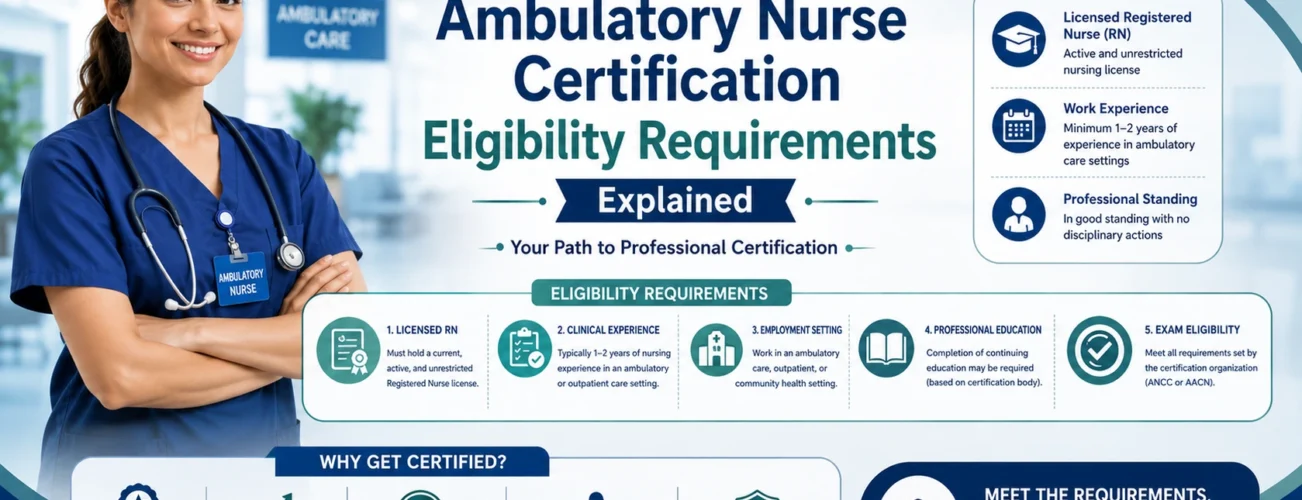
Many nurses assume they need decades of outpatient experience before applying, while others mistakenly believe any registered nurse automatically qualifies. The reality falls somewhere in between. Eligibility depends on a combination of licensure, professional practice, and meeting the certification body’s current requirements.
This guide explains what eligibility means, the typical qualifications candidates should review, common misconceptions, practical preparation advice, and steps you can take if you are not yet ready to apply.
What You’ll Learn
- ✔ Who can pursue ambulatory nursing certification
- ✔ Common eligibility requirements
- ✔ Clinical experience considerations
- ✔ Documentation you’ll likely need
- ✔ Mistakes that delay applications
- ✔ How to prepare if you don’t yet qualify
Why Eligibility Matters Before You Start Studying
Preparing for any specialty certification requires a significant investment of time and energy. Beginning that journey without confirming eligibility can lead to unnecessary frustration if you discover later that additional experience or documentation is required.
Reviewing the requirements first allows you to create a realistic career plan. If you already qualify, you can move forward confidently with exam preparation. If you don’t, you’ll know exactly which milestones to work toward before scheduling the examination.
Planning ahead also reduces stress because you understand what is expected throughout the certification process.
Who Typically Pursues Ambulatory Nurse Certification?
Although nurses from many clinical backgrounds develop an interest in ambulatory care, this certification is generally intended for registered nurses who provide care in outpatient settings.
Examples include nurses working in:
- Primary care practices
- Family medicine clinics
- Internal medicine offices
- Cardiology clinics
- Women’s health centers
- Pediatric outpatient services
- Orthopedic practices
- Specialty physician offices
- Ambulatory surgery centers
- Community health clinics
- Telehealth programs
- Urgent care facilities
These professionals frequently coordinate care across multiple visits while focusing on prevention, patient education, chronic disease management, and continuity of care.
General Eligibility Components Candidates Should Review
Certification organizations periodically update their policies, so applicants should always verify the latest requirements before submitting an application. However, most specialty nursing certifications evaluate similar categories when determining eligibility.
| Requirement Area | Purpose |
|---|---|
| Active RN License | Confirms legal authority to practice nursing |
| Professional Experience | Demonstrates practical clinical competence |
| Practice Hours | Validates specialty experience |
| Continuing Education | Shows commitment to professional development |
| Application Documentation | Supports eligibility verification |
Each requirement contributes to ensuring that candidates possess sufficient knowledge and practical experience before attempting a specialty certification examination.
Why Clinical Experience Is So Important
Unlike entry-level licensing examinations, specialty certifications are designed for practicing nurses who have already developed professional judgment through patient care.
Daily clinical experience exposes nurses to situations that cannot always be learned from textbooks alone. Managing patient concerns, communicating with interdisciplinary teams, coordinating follow-up care, and making evidence-based decisions all contribute to the knowledge expected during certification.
This practical foundation makes studying more meaningful because candidates can connect theoretical concepts with real patient encounters.
Common Misunderstandings About Eligibility
Many nurses delay certification because they believe they aren’t qualified, even when they may already meet the requirements. Others assume they qualify simply because they hold an RN license.
Let’s clarify a few common misconceptions.
| Myth | Reality |
|---|---|
| “Only nurses with decades of experience qualify.” | Many experienced outpatient nurses become eligible much earlier in their careers. |
| “Every RN automatically qualifies.” | Eligibility usually includes specialty practice experience and other requirements. |
| “Hospital experience always counts the same.” | The relevance of your clinical practice depends on certification requirements. |
| “I should study first and verify later.” | Confirming eligibility before preparing helps avoid unnecessary delays. |
What If You Don’t Meet the Requirements Yet?
Not qualifying today doesn’t mean you won’t qualify in the future. Many successful certified nurses spent several years building outpatient experience before applying.
If you’re still gaining experience, focus on strengthening your clinical foundation. Volunteer for patient education initiatives, participate in quality improvement activities, work closely with experienced ambulatory nurses, and seek opportunities to broaden your outpatient responsibilities.
Every month of practical experience contributes to stronger clinical judgment and better exam readiness.
Career Planning TipIf you’re still early in your ambulatory nursing career, use this time to build confidence, expand your clinical skills, and keep a record of your professional achievements. These experiences will support both your eligibility and your long-term career development.
Real-World Story: Planning Ahead Pays Off
David had recently transitioned from an inpatient medical-surgical unit to a large outpatient cardiology clinic. Excited about professional growth, he immediately began researching specialty certifications.
After reviewing the eligibility requirements, he realized he needed additional ambulatory care experience before applying. Rather than feeling discouraged, David used the following year to participate in chronic disease education programs, improve his care coordination skills, and work alongside experienced clinic nurses.
When he eventually became eligible, he found many exam topics much easier to understand because he had encountered similar situations in everyday clinical practice.
Preparing While You Build Eligibility
Even if you’re not planning to apply immediately, you can begin building knowledge that will benefit you later. Reading ambulatory nursing resources, reviewing evidence-based guidelines, and strengthening your understanding of outpatient care principles will make future exam preparation much smoother.
If you’re looking for a broader overview of the certification journey—including career benefits, study planning, and what to expect after becoming certified—you may find our complete certification roadmap helpful as you map out your next professional steps.
Documents You May Need Before Applying
Once you’re confident that you meet the eligibility criteria, the next step is organizing the information needed for your application. Having your records prepared in advance makes the process smoother and reduces the chance of delays.
Depending on the certification organization’s current policies, applicants may need to verify professional credentials, employment history, or continuing education activities.
| Document | Why It’s Important |
|---|---|
| Active RN License Information | Confirms current nursing licensure |
| Employment History | Supports specialty practice experience |
| Continuing Education Records | Demonstrates ongoing professional learning |
| Professional Contact Information | May be needed for verification purposes |
| Application Details | Ensures accurate submission |
Keeping these records organized throughout your nursing career can make future certifications and professional applications much easier.
Experience That Strengthens Your Eligibility
Meeting the minimum requirements is an excellent starting point, but building a wide range of outpatient experience often makes both the certification process and the exam itself much more manageable.
Nurses who regularly perform diverse clinical responsibilities tend to feel more confident because they’ve already encountered many real-world situations reflected in certification questions.
Valuable ambulatory nursing experience may include:
- Patient triage and assessment
- Telephone nursing
- Chronic disease management
- Medication education
- Care coordination across providers
- Preventive health counseling
- Discharge planning and follow-up
- Electronic health record documentation
- Quality improvement participation
- Patient safety initiatives
How Long Should You Wait Before Applying?
There isn’t a universal timeline that fits every nurse. Some candidates become eligible relatively early in their ambulatory careers, while others choose to gain additional experience before sitting for the examination.
Instead of asking, “Have I worked long enough?” consider asking:
- Am I comfortable handling common outpatient clinical situations?
- Can I explain the reasoning behind my nursing decisions?
- Do I understand care coordination and patient education principles?
- Am I consistently applying evidence-based practice?
- Have I reviewed the latest eligibility requirements?
If you answer “yes” to most of these questions, you may be in a stronger position to begin preparing for certification.
Professional TipWaiting until you feel “perfectly ready” often delays progress unnecessarily. Many successful candidates begin preparing once they meet the requirements and have built a solid foundation of outpatient experience.
How Employers View Specialty Certification
Healthcare employers increasingly encourage professional development because it supports quality care, patient safety, and lifelong learning.
Although certification may not be mandatory for every ambulatory nursing position, it often demonstrates qualities that employers appreciate, including initiative, accountability, and dedication to clinical excellence.
| Employer Perspective | Professional Value |
|---|---|
| Commitment to learning | Shows motivation to improve professionally |
| Specialized knowledge | Supports high-quality outpatient care |
| Evidence-based practice | Promotes better patient outcomes |
| Leadership potential | Supports future advancement opportunities |
| Professional credibility | Builds confidence among colleagues and patients |
Common Application Mistakes to Avoid
Many delays occur not because candidates are ineligible, but because avoidable mistakes create unnecessary complications during the application process.
1. Waiting Until the Last Minute
Gathering documentation often takes longer than expected. Begin organizing your records well before your planned exam date.
2. Assuming Older Information Is Still Current
Certification requirements can change over time. Always review the most recent eligibility information before submitting your application.
3. Forgetting Continuing Education Records
Keep certificates and educational records organized throughout your career instead of searching for them at the last minute.
4. Underestimating the Study Timeline
Even experienced ambulatory nurses benefit from a structured preparation plan. Building knowledge gradually is generally more effective than intensive cramming.
5. Ignoring Clinical Weaknesses
Certification preparation isn’t just about reinforcing strengths. Spend additional time reviewing concepts you don’t encounter regularly in your daily practice.
Building Stronger Clinical Experience Before Certification
If you’re still gaining outpatient experience, there are many ways to continue growing professionally before applying.
- Volunteer to educate patients about chronic conditions.
- Participate in clinic quality improvement initiatives.
- Observe experienced nurse leaders.
- Strengthen documentation skills.
- Learn more about care coordination across specialties.
- Become familiar with preventive healthcare guidelines.
- Develop confidence communicating with multidisciplinary teams.
These experiences not only strengthen your eligibility but also improve your confidence as a practicing ambulatory nurse.
Real-World Example: Small Steps Lead to Big Progress
Maria worked in a community health clinic and initially believed she wasn’t experienced enough to pursue certification. Instead of putting the idea aside, she created a one-year professional development plan.
She attended continuing education sessions, volunteered for diabetes education events, joined a quality improvement project, and worked closely with her clinic’s nurse educator whenever possible.
By the time Maria met the eligibility requirements, she wasn’t just qualified—she felt significantly more confident in her ability to manage complex outpatient situations. Looking back, she realized that preparing for eligibility had made her a stronger nurse long before she ever submitted her application.
Creating Your Personal Eligibility Checklist
Every nurse’s journey is different, but having a written checklist can help you stay organized and focused on the next milestone.
| Checklist Item | Status |
|---|---|
| Active RN license | □ Complete |
| Required clinical experience | □ Complete |
| Continuing education records | □ Complete |
| Employment documentation | □ Complete |
| Study schedule created | □ Complete |
| Application reviewed before submission | □ Complete |
Working through one step at a time makes the certification journey feel much more manageable and helps you stay focused on long-term professional success.
Preparing for Certification After Meeting the Requirements
Once you’ve confirmed that you’re eligible, the next objective is creating a preparation strategy that fits your schedule and learning style. Many registered nurses balance full-time clinical responsibilities with family commitments, making consistency more valuable than long study sessions.
A structured study plan allows you to review core concepts gradually while reinforcing your clinical reasoning through regular practice. Instead of trying to master everything at once, divide the content into manageable weekly goals and monitor your progress.
| Week | Primary Focus |
|---|---|
| Week 1 | Review the exam blueprint and identify weak areas |
| Week 2 | Patient assessment and clinical decision-making |
| Week 3 | Care coordination and chronic disease management |
| Week 4 | Health promotion and patient education |
| Week 5 | Professional practice, ethics, and quality improvement |
| Week 6 | Complete full-length practice sessions and review mistakes |
Signs You’re Ready to Schedule the Exam
Many candidates wonder whether they should wait another month or move forward with their exam date. While no one feels completely prepared, several indicators suggest you’re approaching exam readiness.
- You understand the reasoning behind clinical decisions instead of memorizing answers.
- You consistently perform well on practice questions.
- You can confidently explain ambulatory nursing concepts.
- You have reviewed your weaker topics multiple times.
- You feel comfortable managing your time during practice sessions.
If these statements describe your preparation, you’re likely moving in the right direction.
Preparation ReminderEligibility confirms that you can apply for certification. Thorough preparation is what helps you succeed on exam day. Give yourself enough time to build confidence before scheduling your examination.
Frequently Overlooked Ways to Strengthen Your Application
Beyond meeting the minimum requirements, there are several professional activities that can strengthen your overall profile and help you grow as an ambulatory nurse.
- Participate in interdisciplinary care meetings.
- Volunteer for patient education initiatives.
- Assist with clinic workflow improvement projects.
- Support quality and patient safety programs.
- Attend ambulatory nursing conferences or educational workshops.
- Stay current with evidence-based clinical guidelines.
These experiences contribute to both your professional development and your confidence throughout the certification journey.
Why Choose ExamFellow for Your Exam Preparation?
Meeting the eligibility requirements is only the beginning. Success on the certification exam depends on understanding how to apply your knowledge in realistic clinical situations.
ExamFellow is designed to help nurses prepare with confidence by combining practical learning with exam-style practice that reflects the way specialty nursing questions are presented.
With ExamFellow, you can:
- Practice realistic scenario-based questions.
- Strengthen clinical judgment through detailed explanations.
- Identify weak knowledge areas before exam day.
- Improve confidence with consistent self-assessment.
- Study at your own pace from any device.
- Build familiarity with certification-style question formats.
Take the Next Step Toward Certification
If you’ve confirmed that you’re eligible, now is the ideal time to begin preparing with realistic study resources designed for ambulatory nursing professionals.
Start practicing with ExamFellow’s comprehensive question bank and build the confidence you need for exam day.
Continue Learning About Ambulatory Nurse Certification
Your certification journey doesn’t end with understanding the eligibility requirements. Learning about the long-term career value and creating an effective preparation strategy will help you make informed decisions throughout the process.
If you’re still deciding whether earning this credential aligns with your professional goals, our article on the long-term value of ambulatory nurse certification explores career growth, professional benefits, and why many nurses consider certification a worthwhile investment.
For a broader overview of the certification process—from understanding the credential to building a study plan and preparing for exam day—our step-by-step certification guide brings everything together in one practical resource.
Final Thoughts
Confirming your eligibility is one of the smartest first steps you can take before preparing for any specialty certification. It ensures you’re investing your time wisely and allows you to focus on building the clinical knowledge and confidence needed for success.
Remember that certification is more than meeting a checklist of requirements. It’s an opportunity to strengthen your expertise, improve patient care, and demonstrate your commitment to professional excellence in ambulatory nursing.
Whether you’re ready to apply today or still gaining outpatient experience, thoughtful planning and continuous learning will help position you for long-term success throughout your nursing career.
Frequently Asked Questions
Do I need outpatient nursing experience before applying for certification?
Yes. Specialty certifications generally require relevant clinical experience in addition to an active RN license. Always review the current eligibility requirements before applying.
Can hospital nursing experience count toward eligibility?
Some aspects of your experience may be valuable, but eligibility is typically based on specialty-related practice. Review the latest certification requirements to determine how your experience applies.
Should I begin studying before I officially qualify?
Absolutely. Building your knowledge early can make future preparation much easier. Just be sure to verify your eligibility before scheduling the examination.
What’s the biggest mistake applicants make?
Many candidates wait until the last minute to organize documentation or verify the latest eligibility requirements. Planning ahead helps avoid unnecessary delays.
What should I do after confirming my eligibility?
Create a realistic study schedule, review the exam content areas, practice scenario-based questions regularly, and monitor your progress to build confidence before exam day.