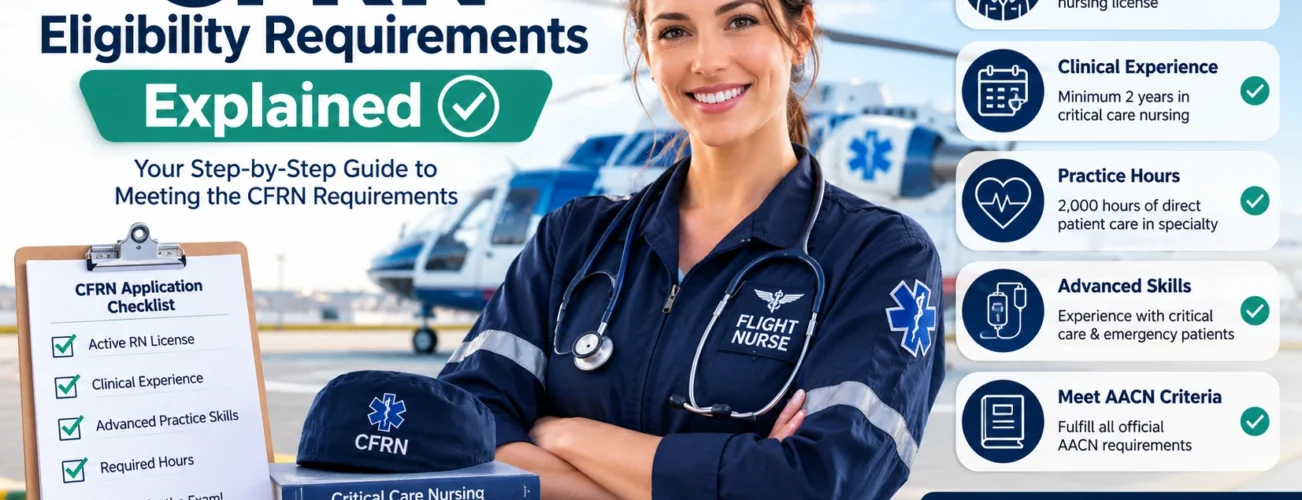
Becoming a Certified Flight Registered Nurse (CFRN®) is an important career milestone for nurses who want to demonstrate advanced knowledge in critical care transport and flight nursing. Before beginning your study plan, however, there’s one question every candidate should answer:
Do I meet the CFRN eligibility requirements?
Understanding the requirements early can save time, prevent unnecessary stress, and help you build a realistic roadmap toward certification. Many nurses assume they need years of flight nursing experience before applying, while others mistakenly believe holding an RN license alone is enough. In reality, the certification process is designed to validate knowledge acquired through relevant clinical experience and professional development.
This guide explains what the eligibility requirements generally involve, who should consider the certification, common misconceptions, and practical steps you can take to prepare—even if you’re not quite ready to sit for the exam.
- ✔ Who should pursue CFRN certification
- ✔ Typical eligibility requirements
- ✔ Clinical experience that supports success
- ✔ Common application mistakes
- ✔ What to do if you don’t qualify yet
- ✔ How to prepare for the next step
Why Checking Eligibility Before Studying Is Important
Preparing for the CFRN exam requires a significant investment of both time and effort. Before creating a study schedule or purchasing review materials, it’s important to verify that you meet the current eligibility requirements established by the certification organization.
Confirming eligibility early allows you to focus on preparation with confidence. If additional experience is needed, you’ll know exactly what to work toward rather than discovering the requirement after months of studying.
Taking this simple step helps you plan your professional development more effectively and avoids unnecessary frustration later in the certification process.
Who Typically Pursues CFRN Certification?
The CFRN credential is designed for registered nurses who provide care for critically ill or injured patients requiring transport in challenging environments. Candidates often come from backgrounds where rapid assessment, advanced interventions, and interdisciplinary teamwork are part of everyday practice.
Many successful candidates have experience working in:
- Emergency Departments
- Adult Intensive Care Units
- Pediatric Intensive Care Units
- Cardiovascular Intensive Care Units
- Trauma Centers
- Critical Care Transport Teams
- Air Medical Programs
- Emergency Medical Services
- Level I or Level II Trauma Hospitals
Although flight nursing experience can certainly be valuable, many nurses begin preparing for certification while transitioning into transport medicine from emergency or critical care settings.
General Eligibility Components Candidates Should Review
Certification organizations periodically update eligibility policies, so it’s always important to review the latest official requirements before submitting an application. However, most specialty nursing certifications evaluate similar categories when determining whether candidates are ready to test.
| Requirement Area | Purpose |
|---|---|
| Active RN License | Verifies legal authority to practice nursing |
| Clinical Experience | Demonstrates practical patient care knowledge |
| Critical Care Background | Supports advanced transport decision-making |
| Professional Development | Encourages continuous learning |
| Application Documentation | Confirms eligibility information |
Each requirement contributes to ensuring that candidates possess the clinical foundation needed for advanced transport nursing certification.
Why Relevant Clinical Experience Matters
The CFRN examination is designed for experienced nurses who regularly manage complex patient situations. Unlike entry-level licensing examinations, specialty certifications evaluate clinical judgment developed through real-world practice.
Working with critically ill patients helps nurses strengthen skills such as rapid assessment, airway management, cardiovascular stabilization, trauma care, medication administration, and interdisciplinary communication.
These experiences make certification preparation much more meaningful because candidates can connect theoretical concepts to situations they’ve encountered during patient care.
Common Misconceptions About CFRN Eligibility
Many nurses delay certification unnecessarily because they misunderstand the eligibility process. Let’s look at several common myths.
| Myth | Reality |
|---|---|
| “Only experienced flight nurses qualify.” | Many candidates prepare while transitioning from emergency or critical care backgrounds. |
| “Any RN automatically qualifies.” | Relevant clinical experience remains an important consideration. |
| “Emergency department experience isn’t useful.” | Emergency nursing provides valuable critical care experience for many candidates. |
| “I should start studying before confirming eligibility.” | Verifying requirements first helps avoid unnecessary delays later. |
What If You Don’t Meet the Requirements Yet?
Not qualifying today doesn’t mean you won’t become eligible in the future. Many certified flight nurses spent several years developing emergency or intensive care experience before pursuing transport medicine.
If you’re still building experience, focus on strengthening your clinical foundation by seeking opportunities to care for critically ill patients, participate in trauma resuscitations, improve airway management skills, and work alongside experienced transport clinicians whenever possible.
Real-World Example: Alex Built the Right Foundation
Alex dreamed of becoming a flight nurse shortly after graduating from nursing school. Instead of rushing toward certification, he accepted a position in a Level I trauma center where he gained experience managing critically ill patients, assisting during trauma activations, and working closely with emergency physicians and transport teams.
After several years of building those skills, Alex found that many topics covered on the CFRN exam felt familiar because they reflected situations he had already managed during clinical practice.
His preparation became much easier because he had invested time in developing experience before pursuing certification.
Preparing While You Build Eligibility
Even if you’re not planning to apply immediately, you can begin strengthening your knowledge of transport medicine. Reading evidence-based guidelines, reviewing trauma protocols, understanding aviation physiology, and expanding your critical care knowledge will make future preparation significantly easier.
If you’re still exploring how to prepare effectively once you become eligible, our article on building a successful first-attempt study strategy explains practical preparation techniques that many candidates use before exam day.
Documents You Should Prepare Before Applying
After confirming that you meet the eligibility requirements, the next step is gathering the documentation needed to complete your application accurately. Being organized early helps prevent delays and makes the application process much smoother.
Depending on the certification body’s current requirements, you may need to provide information related to your nursing license, employment history, and professional development activities.
| Document | Why It’s Important |
|---|---|
| Active RN License Details | Verifies current nursing licensure |
| Employment History | Supports relevant clinical experience |
| Continuing Education Records | Demonstrates ongoing professional learning |
| Professional Contact Information | May be required during the application process |
| Application Information | Helps ensure accurate submission |
Maintaining organized professional records throughout your career can simplify future certification renewals and additional specialty certifications.
Clinical Experience That Helps You Succeed
Meeting the minimum eligibility requirements is only part of the journey. Candidates with diverse critical care experience often feel more confident because they’ve already managed many of the situations reflected on the examination.
Valuable experience includes caring for patients with complex medical emergencies, traumatic injuries, respiratory failure, cardiovascular instability, and neurological conditions.
Experiences that strengthen your preparation include:
- Trauma resuscitation
- Mechanical ventilation management
- Advanced airway procedures
- Hemodynamic monitoring
- Cardiovascular emergency care
- Rapid patient assessment
- Critical care pharmacology
- Interdisciplinary communication
- Patient stabilization before transport
- Emergency decision-making under pressure
The broader your clinical exposure, the easier it becomes to apply theoretical knowledge during certification preparation.
When Is the Right Time to Apply?
Many nurses ask whether they should apply as soon as they become eligible or wait until they’ve gained additional experience.
There isn’t a single correct answer. Instead of focusing only on the number of years you’ve worked, consider whether you feel comfortable managing critically ill patients and making evidence-based clinical decisions under pressure.
Ask yourself:
- Do I regularly care for critically ill patients?
- Am I confident managing emergency situations?
- Can I explain the reasoning behind my clinical decisions?
- Do I understand transport-specific considerations?
- Have I reviewed the latest certification requirements?
If you answer “yes” to most of these questions, you may be ready to begin planning your certification journey.
How Employers View Specialty Certification
Air medical programs and healthcare organizations often look for nurses who demonstrate a commitment to professional growth. While certification may not always be required, it can reinforce your qualifications when applying for highly competitive transport nursing positions.
Certification frequently reflects qualities employers appreciate, including:
- Commitment to lifelong learning
- Strong clinical judgment
- Evidence-based practice
- Professional accountability
- Dedication to patient safety
- Specialized transport nursing knowledge
Combined with practical experience, these qualities help create a stronger professional profile.
Common Eligibility and Application Mistakes
Many application delays result from avoidable mistakes rather than a lack of qualifications. Paying attention to these details can save both time and frustration.
1. Waiting Until the Last Minute
Don’t postpone gathering documentation until you’re ready to submit your application. Keeping professional records organized throughout your career makes the process much easier.
2. Assuming Requirements Never Change
Certification organizations periodically update eligibility criteria. Always verify the latest requirements before applying.
3. Underestimating the Importance of Clinical Experience
The CFRN exam is designed for experienced nurses. Practical patient care experience often contributes more to exam readiness than memorizing large amounts of information.
4. Starting an Intensive Study Plan Too Early
If you’re still months or years away from eligibility, focus first on strengthening your clinical skills. Detailed exam preparation is generally most effective once you’re closer to your testing date.
5. Ignoring Professional Development Opportunities
Continuing education, trauma training, simulation exercises, and quality improvement projects all contribute to your overall professional growth and can improve your confidence before certification.
Building Your Experience Before Certification
If you’re still developing the experience needed for transport nursing, there are many ways to strengthen your clinical foundation.
- Volunteer for trauma response teams.
- Participate in simulation training.
- Strengthen airway management knowledge.
- Develop confidence with critically ill patients.
- Learn from experienced flight nurses whenever possible.
- Participate in continuing education related to emergency and critical care.
- Improve communication during multidisciplinary emergencies.
Each of these experiences contributes to stronger clinical judgment and better preparation for future certification.
Real-World Story: Jennifer Prepared Before She Qualified
Jennifer worked in a cardiovascular intensive care unit and hoped to transition into flight nursing. Although she wasn’t yet eligible for certification, she began strengthening her skills by attending trauma education programs, participating in simulation training, and reviewing transport medicine principles during her free time.
When she eventually met the eligibility requirements, she found that many advanced concepts already felt familiar because she had gradually built her knowledge over several years instead of trying to learn everything immediately before the exam.
Is Certification the Right Next Step for You?
Eligibility tells you whether you can pursue the credential, but deciding whether you should pursue it depends on your professional goals.
If you’re still weighing the long-term value of becoming CFRN certified, our article on whether flight nursing certification is the right career investment explores career growth, professional advantages, and the potential benefits of earning this respected credential before you commit to the certification process.
Preparing for the CFRN Exam After Meeting the Requirements
Once you’ve confirmed that you’re eligible, the next priority is creating a preparation plan that fits your schedule and learning style. Many candidates continue working full-time while studying, making consistency far more effective than occasional marathon study sessions.
Breaking the exam content into manageable weekly goals allows you to build knowledge gradually while reducing stress. As your confidence grows, you’ll be better prepared to apply clinical reasoning in the scenario-based questions commonly found on the certification exam.
| Preparation Stage | Primary Goal |
|---|---|
| Week 1 | Review the exam content outline and identify weaker subjects. |
| Week 2 | Study airway, respiratory, and cardiovascular emergencies. |
| Week 3 | Focus on trauma, shock, and neurological care. |
| Week 4 | Review transport physiology, pediatrics, and obstetrics. |
| Week 5 | Complete timed practice questions and analyze mistakes. |
| Week 6 | Perform a comprehensive review before scheduling the exam. |
Signs You’re Ready to Schedule the Examination
Many nurses wonder whether they should postpone the exam or move forward once they’re eligible. While no one feels completely prepared, there are several positive indicators that suggest you’re on the right track.
- You consistently understand the reasoning behind correct answers.
- You perform well on scenario-based practice questions.
- You feel comfortable prioritizing patient care decisions.
- Your weaker topics are becoming strengths through regular review.
- You can complete practice sessions without feeling rushed.
Additional Ways to Strengthen Your Professional Profile
Beyond meeting the minimum requirements, many nurses continue developing their skills before and after certification. These experiences not only improve patient care but also strengthen long-term career opportunities.
- Participate in trauma simulation exercises.
- Join quality improvement initiatives.
- Attend emergency and critical care conferences.
- Expand your knowledge of transport medicine.
- Volunteer for leadership responsibilities.
- Mentor less experienced nurses.
- Stay current with evidence-based clinical guidelines.
Continuous learning demonstrates the same professional commitment that specialty certification is designed to recognize.
Why Choose ExamFellow for CFRN Exam Preparation?
Once you’ve confirmed your eligibility, the next challenge is preparing efficiently. Reading textbooks is important, but applying your knowledge to realistic patient scenarios is equally valuable.
ExamFellow is designed to help flight nursing candidates strengthen critical thinking, identify weak areas, and build confidence through exam-style practice.
With ExamFellow, you can:
- Practice realistic transport nursing questions.
- Improve clinical reasoning with detailed explanations.
- Identify knowledge gaps before exam day.
- Study at your own pace.
- Reinforce high-yield concepts through repeated practice.
- Develop confidence for certification-level questions.
Ready to Begin Your Preparation?
Once you’ve verified your eligibility, the best next step is to build confidence with high-quality practice questions and consistent study.
Access ExamFellow’s complete CFRN practice materials and prepare with resources designed to support your certification goals from start to finish.
Helpful Resources for Your Certification Journey
Every nurse’s path to becoming CFRN certified is different. Some candidates begin preparing immediately after confirming their eligibility, while others spend additional time strengthening specific clinical skills before scheduling the examination.
If you’re ready to move from planning to preparation, our guide on proven strategies for passing the CFRN exam provides practical study techniques, time-management advice, and preparation tips that can help you approach exam day with greater confidence.
If you’re still evaluating whether certification aligns with your long-term career goals, reviewing both the benefits of certification and effective preparation strategies can help you make a well-informed decision before committing to the exam.
Final Thoughts
Understanding the CFRN eligibility requirements is the first step toward earning one of the most respected credentials in transport nursing. Confirming that you meet the requirements allows you to focus your energy where it matters most—developing the knowledge, clinical judgment, and confidence needed to succeed.
Remember that certification is not simply about qualifying to take an examination. It’s about demonstrating a commitment to professional excellence, lifelong learning, and delivering high-quality care to critically ill patients in demanding transport environments.
Whether you’re eligible today or still building your experience, thoughtful career planning and continuous professional development will help position you for long-term success in flight nursing.
Frequently Asked Questions
Do I need flight nursing experience before applying for the CFRN exam?
Not necessarily. Many candidates come from emergency departments, intensive care units, or critical care transport programs. Relevant critical care experience is often the foundation that prepares nurses for transport medicine.
Should I wait until I have many years of experience before pursuing certification?
Experience is valuable, but you don’t need to delay unnecessarily. Once you meet the eligibility requirements and feel confident in your clinical foundation, you can begin preparing for the examination.
Can I start studying before I’m officially eligible?
Yes. Learning transport medicine concepts, reviewing critical care topics, and strengthening clinical reasoning early can make future exam preparation much easier.
What’s the biggest mistake candidates make before applying?
Many nurses assume they either qualify automatically or don’t qualify at all without reviewing the latest eligibility requirements. Verifying the current criteria early helps avoid unnecessary delays.
What should I do after confirming my eligibility?
Create a structured study schedule, review the exam content areas, practice scenario-based questions regularly, and monitor your progress so you’re fully prepared before scheduling your certification exam.