
Preparing for the Certified Nurse Educator (CNE) examination is a significant milestone for nursing professionals who want to demonstrate excellence in academic nursing education. Unlike many clinical certification exams, the CNE does not primarily test bedside nursing skills. Instead, it evaluates your ability to educate, mentor, assess, and inspire future nurses while applying evidence-based teaching practices in academic settings.
Many candidates enter the exam with years of clinical experience, assuming that extensive nursing knowledge alone will guarantee success. Unfortunately, this assumption often leads to disappointing results. The CNE examination focuses on educational competencies, instructional strategies, curriculum development, learner assessment, and leadership rather than direct patient care. Understanding this distinction is one of the first steps toward effective preparation.
Below are some of the most common CNE Exam Mistakes candidates make when preparing for the CNE exam and practical strategies to avoid them.
Mistake #1: Treating the CNE Like a Clinical Nursing Exam
One of the biggest reasons candidates struggle is approaching the CNE as though it were another clinical certification examination.
Experienced nurses naturally rely on their clinical expertise when answering questions. However, the CNE exam is designed to assess your effectiveness as an educator, not your ability to provide patient care.
For example, when presented with a classroom scenario, the correct answer is often based on educational theory, student learning outcomes, or instructional design—not the clinical intervention you might choose in practice.
Successful candidates shift their mindset from:
“What would I do as a nurse?”
to
“What should I do as a nurse educator?”
Developing this educator-focused perspective can significantly improve your performance throughout the examination.
Mistake #2: Memorizing Instead of Understanding
Many candidates spend weeks memorizing educational terms, theorists, and definitions without learning how those concepts apply in real teaching situations.
The CNE examination rewards application rather than memorization.
For instance, simply remembering the characteristics of adult learning theory is not enough. You should understand how those principles influence lesson planning, student engagement, simulation activities, and classroom discussions.
When reviewing each topic, ask yourself questions such as:
- How would I apply this in a classroom?
- Why is this strategy effective?
- What learning problem does this solve?
- How does it improve student outcomes?
This deeper level of understanding makes it much easier to answer scenario-based questions.
Mistake #3: Ignoring the Exam Blueprint
Some candidates study whatever resources they happen to find online instead of following the official examination blueprint.
The blueprint outlines the competencies and knowledge areas most heavily represented on the exam. Ignoring it often leads to spending too much time on low-priority topics while overlooking heavily tested domains.
Before creating your study schedule:
- Review every competency listed in the blueprint.
- Identify areas where you feel least confident.
- Allocate more study time to weaker subjects.
- Track your progress across every content domain.
A structured study plan based on the exam blueprint is usually far more effective than reading random study materials.
Mistake #4: Underestimating Assessment and Evaluation
Many nursing educators enjoy teaching but spend relatively little time studying assessment strategies.
Unfortunately, assessment and evaluation represent a major portion of the examination.
Candidates should be comfortable with concepts such as:
- Formative assessment
- Summative assessment
- Clinical evaluation
- Rubric development
- Test construction
- Item analysis
- Reliability
- Validity
- Student feedback
Questions often require candidates to select the most appropriate evaluation method for a particular educational situation.
Rather than memorizing definitions, practice applying these concepts in realistic scenarios.
Mistake #5: Neglecting Curriculum Development
Curriculum development is another area frequently overlooked during exam preparation.
Some candidates assume curriculum planning is primarily the responsibility of program directors rather than faculty members.
However, nurse educators regularly contribute to:
- Course planning
- Learning outcomes
- Competency mapping
- Program evaluation
- Accreditation preparation
- Continuous curriculum improvement
Understanding how individual courses align with broader program goals is essential.
Practice thinking beyond individual lessons and consider how each educational activity contributes to long-term student success.
Mistake #6: Spending Too Little Time on Leadership
Leadership is often underestimated because candidates associate it with administrative positions rather than classroom teaching.
In reality, nurse educators demonstrate leadership every day by:
- Mentoring students
- Leading curriculum improvements
- Supporting faculty collaboration
- Promoting evidence-based education
- Managing classroom challenges
- Encouraging professional development
Leadership questions frequently involve communication, decision-making, conflict resolution, and organizational change rather than formal management responsibilities.
Developing leadership skills not only improves exam performance but also strengthens your effectiveness as an educator.
Mistake #7: Relying Only on Reading
Reading textbooks alone is rarely enough to prepare for the CNE examination.
Educational knowledge becomes much stronger when combined with active learning strategies.
Effective preparation often includes:
- Practice questions
- Teaching case studies
- Simulation scenarios
- Flashcards
- Self-assessment quizzes
- Group discussions
- Teaching reflections
After completing each practice question, spend time reviewing both correct and incorrect answers.
Understanding why an answer is correct is often more valuable than simply knowing the answer itself.
Mistake #8: Skipping Practice Exams
Some candidates delay taking full-length practice exams because they fear poor scores.
Ironically, avoiding practice tests often reduces confidence rather than improving it.
Practice examinations help you:
- Build endurance
- Improve time management
- Identify weak areas
- Become familiar with question styles
- Reduce test anxiety
- Strengthen critical thinking
Treat every practice exam as a learning opportunity instead of simply measuring your readiness.
Even incorrect answers provide valuable insight into areas that need additional review.
Mistake #9: Not Studying According to the Exam Blueprint
A common error is giving equal attention to every topic instead of studying according to the official blueprint.
Some candidates spend excessive time reviewing educational theories while neglecting assessment strategies, curriculum development, or leadership. Since the examination is blueprint-driven, every competency has a defined level of emphasis. Following the blueprint allows you to invest your study time where it matters most rather than guessing which topics are likely to appear.
Create a checklist for each competency and track your confidence level. This approach makes your preparation more organized and helps ensure that no major content area is overlooked.
Mistake #10: Ignoring Answer Rationales
Many learners complete hundreds of practice questions but immediately move on after checking whether an answer is right or wrong.
This is a missed opportunity.
The explanation behind each answer often teaches concepts that appear repeatedly throughout the examination. Understanding why an answer is correct strengthens critical thinking far more effectively than memorizing isolated facts.
Whenever you answer a question incorrectly, ask yourself:
- Why was my choice incorrect?
- Which educational principle did I overlook?
- How can I apply this concept in a different scenario?
Learning from mistakes is one of the fastest ways to improve your performance.
Mistake #11: Studying Without a Schedule
Busy nurse educators often fit exam preparation around work, family responsibilities, and teaching commitments. Without a structured study schedule, it’s easy to spend too much time on familiar topics while neglecting weaker areas.
A realistic study plan should include:
- Weekly learning goals
- Daily review sessions
- Practice question sessions
- Time for revision
- Full-length practice exams
- Progress reviews every week
Consistency is more valuable than occasional long study sessions.
Mistake #12: Focusing Only on Knowledge Instead of Application
The CNE examination is not designed to test simple recall.
Many questions present realistic educational situations that require candidates to evaluate a problem and select the most appropriate response.
Instead of asking:
“Can I remember this theory?”
ask yourself:
“How would I apply this theory while teaching nursing students?”
Thinking like an educator rather than a student helps prepare you for scenario-based questions.
Mistake #13: Poor Time Management During the Exam
Even well-prepared candidates can struggle if they spend too much time on difficult questions.
A practical strategy includes:
- Reading each question carefully.
- Eliminating obviously incorrect answers.
- Selecting the best remaining option.
- Marking difficult questions for review if allowed.
- Avoiding excessive time on any single question.
Remember that every question carries value. Spending ten minutes on one challenging item may leave insufficient time for several easier questions later in the exam.
Mistake #14: Allowing Exam Anxiety to Affect Performance
Feeling nervous before a professional certification examination is completely normal.
However, anxiety becomes a problem when it interferes with concentration or decision-making.
Helpful strategies include:
- Getting adequate sleep before exam day.
- Avoiding last-minute cramming.
- Arriving prepared and organized.
- Taking slow, controlled breaths if you feel overwhelmed.
- Focusing on one question at a time.
Confidence comes from preparation, not from luck.
Mistake #15: Waiting Too Long to Take Practice Exams
Some candidates postpone full-length practice exams until the final days before testing.
Instead, begin using realistic practice tests early in your preparation.
Practice examinations help you:
- Measure progress objectively.
- Improve pacing.
- Identify weak competency areas.
- Become comfortable with computer-based testing.
- Reduce uncertainty before exam day.
If you are looking for additional practice, working through a comprehensive CNE Practice Questions Bank with detailed answer explanations can help reinforce educational concepts while identifying areas that need further review.
Mistake #16: Studying Alone Without Reflecting on Teaching Practice
The strongest candidates often connect educational concepts with their own classroom or clinical teaching experiences.
After reviewing a topic, think about situations where you have:
- Facilitated student learning.
- Designed assessments.
- Mentored struggling learners.
- Evaluated course outcomes.
- Participated in curriculum improvements.
Relating theory to real teaching experiences improves long-term retention and helps answer scenario-based questions more effectively.
Build a Balanced Preparation Strategy
Successful preparation combines multiple learning methods instead of relying on a single resource.
An effective approach often includes:
- Reviewing the official blueprint.
- Reading educational references.
- Completing practice questions.
- Reviewing answer explanations.
- Revisiting weak areas.
- Taking timed practice examinations.
- Reflecting on real teaching experiences.
Each method reinforces a different aspect of learning and helps develop confidence before exam day.
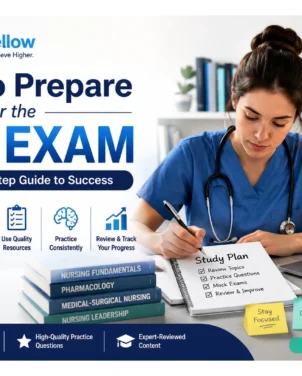
For a complete preparation strategy, including study planning, recommended resources, and practical exam-day advice, read ExamFellow’s detailed guide on Prepare for the CNE Exam.
Final Thoughts
The Certified Nurse Educator examination evaluates far more than your ability to remember educational terminology. It measures your readiness to teach, mentor, evaluate learners, contribute to curriculum development, support continuous quality improvement, and lead within academic nursing education. These competencies are reflected in the current examination blueprint developed through practice analysis of the nurse educator role.
Avoiding the common mistakes discussed in this guide can help you prepare more efficiently and approach the examination with greater confidence. Focus on understanding concepts instead of memorizing facts, study according to the official blueprint, analyze every practice question carefully, and maintain a consistent study schedule.
Most importantly, remember that certification is not simply about passing an examination—it reflects your commitment to excellence in nursing education and your dedication to preparing the next generation of nursing professionals. With the right study strategy, realistic practice, and steady preparation, you’ll be well positioned to achieve your CNE certification goals.