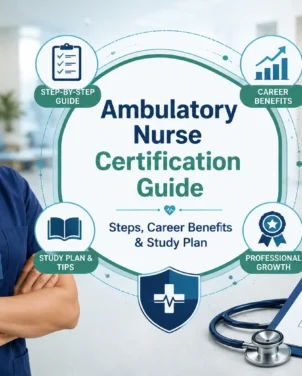

Every year, thousands of registered nurses consider earning a specialty certification to strengthen their professional credentials. One question often comes up before they commit their time and money: Is Ambulatory Nurse Certification really worth it?
For many nurses working in outpatient clinics, physician offices, ambulatory surgery centers, and specialty practices, the answer is often yes—but not for the same reasons. While some hope certification will help them earn promotions or qualify for leadership positions, others pursue it to improve patient care, expand their clinical knowledge, or simply stand out in a competitive job market.
Certification isn’t a shortcut to career success, nor does it automatically guarantee a higher salary. Instead, it demonstrates professional excellence, validates specialized knowledge, and shows employers that you’re committed to delivering high-quality ambulatory care.
This guide explores the real value of Ambulatory Nurse Certification, including career opportunities, professional advantages, earning potential, return on investment, and whether pursuing certification aligns with your long-term nursing goals.
- ✔ Learn the career advantages of becoming certified.
- ✔ Understand how certification supports professional growth.
- ✔ Explore salary considerations and long-term value.
- ✔ Discover who benefits most from earning the credential.
- ✔ Decide whether certification fits your career goals.
What Does Ambulatory Nurse Certification Actually Represent?
Many people mistakenly believe certification is simply another exam to pass. In reality, it represents much more than a credential on your resume.
Ambulatory Nurse Certification recognizes registered nurses who have developed specialized knowledge in outpatient healthcare. Certified nurses demonstrate competence in patient assessment, care coordination, health promotion, chronic disease management, patient education, quality improvement, and evidence-based clinical practice.
Unlike inpatient hospital nursing, ambulatory care focuses on helping patients manage their health over time. Nurses often coordinate treatment plans, educate patients and families, communicate with multidisciplinary teams, and help reduce avoidable hospital admissions.
Certification tells employers that you understand these responsibilities at an advanced level and are committed to maintaining high professional standards.
Why More Nurses Are Considering Specialty Certification
The healthcare industry has changed dramatically over the past decade. Advances in medical technology, value-based care, and minimally invasive procedures have shifted many treatments from hospitals to outpatient settings.
As a result, ambulatory nurses now play an increasingly important role in coordinating patient care across multiple healthcare providers.
This growing responsibility has encouraged many experienced nurses to pursue specialty certification as a way to demonstrate expertise and prepare for future career opportunities.
| Healthcare Trend | Impact on Ambulatory Nursing |
|---|---|
| Expansion of outpatient care | Greater demand for skilled ambulatory nurses |
| Chronic disease management | Increased patient education responsibilities |
| Preventive healthcare initiatives | More emphasis on wellness and follow-up care |
| Telehealth services | Broader communication and coordination skills |
| Value-based healthcare | Focus on patient outcomes and quality improvement |
Is Ambulatory Nurse Certification Worth It for Your Career?
The answer depends on your professional goals.
If you’re planning to remain in outpatient nursing, pursue leadership positions, or specialize in ambulatory care, certification can become a valuable career investment. It demonstrates initiative and lifelong learning—qualities that many healthcare organizations appreciate when evaluating candidates for promotions or advanced clinical roles.
On the other hand, if you intend to transition into a completely different nursing specialty in the near future, another certification may better support your long-term plans.
The key is matching your certification with the direction you want your nursing career to take over the next several years.
Ask yourself these questions before pursuing certification:
- Do I enjoy working in outpatient healthcare?
- Do I want to become a clinical leader?
- Would I like greater responsibility in patient education?
- Do I plan to stay in ambulatory care long term?
- Do I want to strengthen my professional credibility?
Professional Benefits Beyond Salary
When nurses discuss certification, salary is often the first topic that comes up. While financial considerations are important, many certified nurses report that the greatest benefits extend well beyond their paycheck.
Certification often contributes to increased confidence, stronger clinical reasoning, improved communication with interdisciplinary teams, and greater trust from colleagues and supervisors.
These advantages can influence your daily work experience just as much as potential financial rewards.
| Professional Benefit | Why It Matters |
|---|---|
| Professional recognition | Highlights specialized knowledge |
| Clinical confidence | Supports better decision-making |
| Leadership readiness | Prepares nurses for expanded responsibilities |
| Patient trust | Builds confidence in care delivery |
| Career flexibility | Strengthens future employment opportunities |
| Continuous learning | Encourages evidence-based practice |
Do Employers Prefer Certified Ambulatory Nurses?
Certification requirements vary between healthcare organizations, but many employers view specialty certification as a positive indicator during hiring and promotion decisions.
Hiring managers often compare candidates with similar experience levels. In those situations, certification may demonstrate additional commitment to professional development and specialized outpatient nursing knowledge.
Although experience remains extremely important, certification can strengthen an already competitive application and show that you’re willing to invest in your profession.
Real-Life Example: Jennifer’s Career Decision
Jennifer had worked for nearly eight years in a busy internal medicine clinic. She enjoyed patient education and often helped coordinate follow-up care for patients managing diabetes and cardiovascular disease.
When a Clinical Nurse Coordinator position became available, several qualified nurses applied. Jennifer decided to earn her ambulatory nursing certification before the interviews began.
She later shared that preparing for the certification helped her organize years of clinical experience into evidence-based practice. During the interview, she confidently discussed quality improvement initiatives, patient safety strategies, and care coordination principles that she had recently reviewed while studying.
Although certification wasn’t the only factor behind her promotion, it strengthened her qualifications and reinforced her commitment to professional growth.
Can Certification Lead to Higher Earnings?
One of the most searched questions online is whether ambulatory nurse certification increases salary.
The honest answer is that certification alone doesn’t automatically result in higher pay. Compensation depends on several factors, including geographic location, employer policies, years of nursing experience, leadership responsibilities, education, and local demand for experienced ambulatory nurses.
However, certification may improve your competitiveness when applying for positions with greater responsibility or advanced clinical roles that often offer stronger compensation packages.
Over time, the combination of experience, continued education, and professional certification can contribute to long-term career growth.
Why Many Nurses See Certification as a Long-Term Investment
Unlike equipment or technology that eventually becomes outdated, professional knowledge continues to benefit your career for years.
The preparation process itself often improves clinical judgment, strengthens patient communication skills, reinforces evidence-based practice, and increases confidence when managing complex outpatient situations.
Many nurses find that the learning gained while preparing for certification proves just as valuable as earning the credential itself.
For candidates beginning their preparation journey, working through realistic clinical scenarios is one of the best ways to identify knowledge gaps before exam day. Many nurses supplement their study schedule with an Ambulatory Nurse Certification practice test to become more comfortable with the style and difficulty of certification-level questions.
Understanding the Return on Investment (ROI) of Ambulatory Nurse Certification
When evaluating whether a professional certification is worthwhile, it’s helpful to think beyond the exam fee or the time spent studying. A better question is: How will this certification benefit my career over the next five or ten years?
For many nurses, the return on investment comes through expanded opportunities, stronger professional credibility, increased confidence in clinical practice, and greater readiness for leadership responsibilities. These benefits may not appear immediately, but they often accumulate throughout a nursing career.
| Investment | Potential Long-Term Value |
|---|---|
| Study time | Improved clinical knowledge and decision-making |
| Certification exam | Professional recognition |
| Continuing education | Current evidence-based practice |
| Practice preparation | Greater confidence during certification testing |
| Professional development | More competitive career opportunities |
Career Growth Opportunities After Becoming Certified
Certification doesn’t lock you into one role—it can broaden your professional options. As healthcare systems continue expanding outpatient services, experienced ambulatory nurses are increasingly involved in care coordination, quality improvement, patient education, population health initiatives, and clinical leadership.
Depending on your experience and workplace, certification may strengthen your qualifications for positions such as:
- Lead Ambulatory Care Nurse
- Clinical Nurse Coordinator
- Patient Care Manager
- Clinic Supervisor
- Quality Improvement Nurse
- Case Management Specialist
- Population Health Nurse
- Telehealth Program Nurse
- Clinical Educator
- Care Navigation Specialist
Many of these positions require excellent communication, clinical judgment, and organizational skills—qualities reinforced during certification preparation.
How Certification Can Strengthen Your Resume
Recruiters often review dozens of applications for a single nursing position. While experience remains one of the most important hiring factors, professional certifications can immediately communicate specialized expertise.
Adding a recognized ambulatory nursing credential to your resume demonstrates initiative and shows that you’ve invested time in advancing your knowledge beyond minimum licensing requirements.
- Highlights specialty knowledge.
- Shows commitment to continuing education.
- Demonstrates professional initiative.
- Supports leadership applications.
- Strengthens credibility during interviews.
Does Certification Improve Clinical Confidence?
One of the most frequently overlooked benefits is confidence.
Nurses often discover that preparing for certification refreshes concepts they haven’t studied since nursing school while introducing updated best practices used in modern outpatient care.
This combination of review and new learning helps many candidates feel more comfortable handling patient education, care coordination, medication management, and complex clinical situations.
Greater confidence doesn’t mean knowing every answer—it means understanding how to evaluate patient situations using sound clinical reasoning.
What Employers Look for Beyond Experience
Healthcare organizations value nurses who continue growing professionally. While years of experience are important, employers also appreciate candidates who actively invest in learning and quality improvement.
Certification can support this professional image because it reflects:
- Commitment to evidence-based practice
- Interest in lifelong learning
- Professional accountability
- Dedication to patient safety
- Strong ethical standards
- Specialized ambulatory care knowledge
Combined with practical experience, these qualities help create a well-rounded candidate for advanced nursing opportunities.
Financial Value Beyond Base Salary
Although salary is an important consideration, many nurses overlook additional financial benefits that can accompany career advancement.
Moving into leadership positions, care coordination roles, or quality improvement departments may provide broader responsibilities, stronger long-term earning potential, and increased professional stability.
Some healthcare organizations also recognize specialty certifications during annual evaluations, professional development programs, or advancement opportunities. Policies vary by employer, so it’s always worth reviewing your organization’s career development framework.
| Direct Benefits | Indirect Benefits |
|---|---|
| Potential promotion opportunities | Higher professional confidence |
| Leadership eligibility | Expanded clinical expertise |
| Broader job opportunities | Greater workplace credibility |
| Competitive resume | Long-term professional growth |
Who Gains the Most from Certification?
Not every nurse has the same career goals. Certification tends to provide the greatest value for professionals who plan to build a long-term career in ambulatory or outpatient healthcare.
You may benefit significantly if you:
- Enjoy patient education.
- Work primarily in outpatient settings.
- Want to become a clinical leader.
- Hope to supervise nursing teams.
- Plan to remain in ambulatory care for several years.
- Want to strengthen your professional reputation.
If you’re still learning about the certification process itself, including eligibility, preparation strategies, and what to expect, our detailed Ambulatory Nurse Certification Guide provides a step-by-step overview to help you get started.
Common Myths About Ambulatory Nurse Certification
Myth 1: Certification Guarantees a Promotion
Certification strengthens your qualifications, but promotions typically depend on multiple factors such as experience, leadership ability, communication skills, and organizational needs.
Myth 2: Only New Nurses Need Certification
Many experienced nurses pursue certification after years of clinical practice to validate their expertise and prepare for future advancement.
Myth 3: The Exam Is Only About Memorization
Certification exams are designed to assess clinical judgment and practical decision-making. Candidates who understand concepts generally perform better than those who rely solely on memorization.
Myth 4: Certification Has No Value Unless You Change Jobs
Even nurses who remain with the same employer often benefit through increased confidence, professional recognition, and opportunities to participate in leadership or quality improvement initiatives.
A Nurse’s Perspective: Why Emily Chose Certification
Emily worked in a busy pediatric specialty clinic where patient education played a major role in her daily responsibilities. She often guided families through treatment plans, follow-up appointments, and medication instructions.
Although she already felt comfortable in her role, she wanted to deepen her knowledge and prepare for future leadership opportunities. After earning her certification, she volunteered to mentor newly hired nurses and later joined her clinic’s quality improvement committee.
Looking back, Emily described certification as one of the best professional investments she had made—not because it instantly changed her job title, but because it expanded her confidence and created opportunities she hadn’t previously considered.
Questions to Ask Yourself Before Pursuing Certification
If you’re still deciding whether certification is worth it, consider these questions:
- Do I see myself working in ambulatory care long term?
- Am I interested in leadership or care coordination?
- Would stronger clinical confidence benefit my daily practice?
- Do I enjoy continuous professional learning?
- Am I looking for ways to strengthen my resume for future opportunities?
If you answered “yes” to most of these questions, certification may be a valuable next step in your nursing career.
How to Maximize the Value of Your Certification
Earning your certification is an important milestone, but its long-term value depends on how you use it throughout your career. Nurses who continue developing their skills after certification often gain the greatest professional rewards.
Instead of viewing certification as the finish line, think of it as the beginning of a new stage in your professional growth. Continue attending educational programs, participating in quality improvement projects, mentoring colleagues, and staying current with evidence-based practices.
| After Certification | How It Supports Your Career |
|---|---|
| Join professional nursing organizations | Expand your network and stay informed |
| Attend continuing education courses | Keep clinical knowledge up to date |
| Volunteer for leadership projects | Build management experience |
| Mentor newer nurses | Develop teaching and leadership skills |
| Participate in quality improvement initiatives | Increase organizational impact |
| Track professional achievements | Strengthen future promotion opportunities |
When Certification May Not Be the Right Choice—Yet
Although certification offers many advantages, timing matters. If you’re brand new to outpatient nursing or planning to transition into another specialty within the next few months, it may be worth focusing first on building practical experience.
Likewise, if you’re balancing significant personal or professional commitments, postponing certification until you can dedicate consistent study time may lead to a better experience and a stronger chance of success.
The goal isn’t to earn a credential as quickly as possible—it’s to pursue certification when you’re prepared to gain lasting value from the process.
Preparing for Success Starts Long Before Exam Day
Many successful candidates say their confidence came from steady preparation rather than marathon study sessions. Creating a realistic study schedule, reviewing core concepts each week, and practicing clinical reasoning consistently are often more effective than trying to memorize hundreds of facts in a short period.
As you prepare, pay attention to the topics you find most challenging. These weaker areas often provide the greatest opportunity for improvement and can make a significant difference in your overall performance.
Why Practice Questions Are So Effective
Reading textbooks and reviewing notes provide important background knowledge, but applying that knowledge is what certification exams truly measure.
Practice questions help you:
- Develop clinical reasoning under realistic conditions.
- Recognize common exam patterns.
- Improve time management.
- Identify knowledge gaps before test day.
- Build confidence through repeated application of concepts.
The key isn’t simply getting questions right—it’s understanding why the correct answer is the safest or most appropriate clinical decision.
Why Choose ExamFellow for Ambulatory Nurse Prep?
Preparing for a specialty nursing certification requires resources that do more than test memory. Effective preparation should strengthen critical thinking, reinforce essential concepts, and help you become comfortable answering scenario-based questions with confidence.
ExamFellow is designed to support nurses throughout their preparation by providing study materials focused on practical application rather than rote memorization.
With ExamFellow, you can:
- Practice with realistic exam-style questions.
- Improve clinical reasoning through patient scenarios.
- Identify strengths and areas that need additional review.
- Build confidence before your certification exam.
- Study at your own pace from any location.
- Reinforce important ambulatory nursing concepts with detailed explanations.
Ready to Move Your Nursing Career Forward?
Whether you’re preparing for your first specialty certification or taking the next step in your outpatient nursing career, consistent practice can make a meaningful difference.
Explore the ExamFellow Ambulatory Nurse Questions Bank to strengthen your knowledge, practice with confidence, and prepare for exam day with realistic questions designed for today’s nursing professionals.
Final Thoughts
So, is Ambulatory Nurse Certification worth it?
For many registered nurses committed to outpatient care, the answer is yes. While certification isn’t a guarantee of a promotion or salary increase, it represents professional excellence, specialized knowledge, and a commitment to lifelong learning—qualities that healthcare organizations continue to value.
Beyond career advancement, the preparation process itself helps sharpen clinical judgment, improve patient education skills, and reinforce evidence-based decision-making. These are benefits you’ll continue using long after the exam is over.
If your goal is to grow within ambulatory care, expand your professional opportunities, and become an even more confident nurse, earning this certification can be a valuable investment in your future.
FAQs
Is Ambulatory Nurse Certification worth it for experienced nurses?
Yes. Even experienced outpatient nurses often pursue certification to validate their expertise, strengthen their resumes, and prepare for leadership or advanced clinical roles. It also demonstrates a commitment to professional development.
Will certification automatically increase my salary?
Not necessarily. Salary depends on factors such as experience, employer policies, geographic location, education, and job responsibilities. However, certification can improve your competitiveness for positions that offer greater earning potential.
Who benefits the most from becoming certified?
Registered nurses planning a long-term career in ambulatory or outpatient care typically gain the greatest value. Certification is especially beneficial for those interested in care coordination, patient education, quality improvement, or leadership positions.
How can I decide if certification is the right investment?
Consider your long-term career goals, your interest in outpatient nursing, and your desire for professional growth. If you plan to remain in ambulatory care and want to strengthen your expertise, certification is often a worthwhile investment.
What’s the best way to prepare for the certification exam?
Create a structured study schedule, focus on understanding clinical concepts instead of memorizing facts, review your weaker topics regularly, and complete realistic practice questions to build confidence and improve clinical reasoning before exam day.