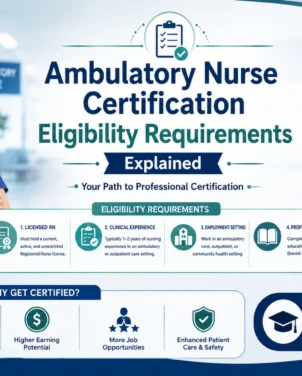

Ambulatory care nursing has become one of the fastest-growing nursing specialties in the United States. As healthcare continues shifting from inpatient hospitals to outpatient clinics, physician practices, ambulatory surgery centers, specialty clinics, and community health facilities, experienced nurses with specialized ambulatory care knowledge are increasingly in demand.
Earning an Ambulatory Care Nursing Certification demonstrates that you possess advanced clinical knowledge, patient education skills, care coordination expertise, and professional commitment beyond everyday nursing practice. It is a credential that employers recognize when hiring experienced nurses for leadership positions, specialty clinics, and patient-centered outpatient care.
Many nurses ask whether certification is worth the effort. The answer often depends on career goals, but for professionals planning long-term growth, certification frequently opens doors to better opportunities, stronger professional credibility, and greater confidence in daily practice.
This guide explains exactly what the certification is, why it matters, who should pursue it, how to prepare effectively, common mistakes to avoid, and practical study strategies that have helped many successful candidates.
Quick Highlight
✔ Demonstrates advanced ambulatory nursing knowledge
✔ Improves professional credibility
✔ Supports career advancement opportunities
✔ Builds confidence in patient-centered outpatient care
✔ Shows commitment to lifelong professional development
What Exactly Is the Ambulatory Nurse Certification?
The Ambulatory Care Nursing Certification validates the specialized knowledge required to provide safe, efficient, and evidence-based care for patients receiving treatment outside traditional hospital inpatient settings. Unlike acute care nursing, ambulatory nursing focuses on coordinating care across multiple visits while promoting prevention, education, chronic disease management, and continuity of care.
Certified ambulatory nurses regularly care for patients in environments such as:
- Primary care clinics
- Family medicine practices
- Cardiology offices
- Orthopedic clinics
- Women’s health centers
- Pediatric outpatient clinics
- Urgent care facilities
- Ambulatory surgery centers
- Community health organizations
- Specialty physician practices
Rather than focusing only on immediate treatment, ambulatory nurses often develop long-term relationships with patients, helping them manage chronic illnesses, navigate healthcare systems, understand medications, schedule follow-up care, and prevent unnecessary hospital admissions.
How Ambulatory Nursing Differs from Hospital Nursing
| Hospital Nursing | Ambulatory Nursing |
|---|---|
| Inpatient care | Outpatient care |
| Short-term treatment | Long-term care coordination |
| Acute illness management | Prevention and chronic disease management |
| Higher patient acuity | Patient education emphasis |
| Continuous bedside monitoring | Scheduled appointments and follow-ups |
| Hospital environment | Clinics and community settings |
Why Nurses Choose to Become Certified
Certification is more than adding another credential after your name. For many nurses, it represents years of clinical experience combined with dedication to delivering high-quality patient care.
Healthcare employers increasingly value certified nurses because certification demonstrates independent learning, current clinical knowledge, and commitment to maintaining professional standards.
Common reasons nurses pursue certification include:
- Professional recognition
- Career advancement
- Leadership opportunities
- Greater confidence in clinical decision-making
- Improved patient education skills
- Enhanced credibility among colleagues
- Personal achievement
- Commitment to lifelong learning
Real-World Example: Sarah’s Career Growth
Sarah had worked in a busy family medicine clinic for seven years. Although she enjoyed educating patients with diabetes and hypertension, she felt overlooked whenever supervisory positions became available.
Her nurse manager encouraged her to pursue ambulatory care certification. Preparing for the examination helped Sarah organize years of clinical knowledge into structured concepts she could confidently apply every day.
Several months after becoming certified, Sarah accepted a Clinical Care Coordinator role overseeing patient education initiatives, chronic disease management programs, and quality improvement projects.
While certification alone did not guarantee promotion, it strengthened her qualifications and demonstrated her commitment to professional excellence.
Why This Certification Matters Across the United States
The American healthcare system continues moving toward outpatient care because it often improves accessibility, lowers healthcare costs, and allows patients to receive treatment without extended hospital stays.
This shift has significantly expanded the responsibilities of ambulatory nurses.
Today’s ambulatory nurses routinely coordinate care between physicians, specialists, pharmacists, rehabilitation providers, insurance companies, and community resources.
As healthcare delivery evolves, employers increasingly seek nurses who understand evidence-based outpatient practice, quality improvement, patient safety, and interdisciplinary collaboration.
Growing Demand for Ambulatory Care Nurses
Healthcare organizations throughout the United States continue expanding outpatient services due to several industry trends:
- Aging population
- Growth in chronic disease management
- Expansion of specialty clinics
- Preventive healthcare initiatives
- Telehealth integration
- Value-based care models
- Patient-centered medical homes
- Population health management
These developments have increased demand for experienced ambulatory nurses capable of coordinating complex patient care while maintaining high standards of clinical excellence.
Who Should Consider This Certification?
This credential is especially valuable for registered nurses working in outpatient healthcare environments who want to strengthen their professional profile.
It may be particularly beneficial for nurses working in:
- Family practice
- Internal medicine
- Specialty clinics
- Outpatient surgery
- Urgent care
- Community health
- Telehealth nursing
- Occupational health
- Patient navigation
- Care coordination
If your long-term career involves outpatient care, leadership, quality improvement, patient education, or chronic disease management, certification can become an important milestone in your professional journey.
As you begin preparing, working through realistic clinical scenarios can help connect theoretical knowledge with practical decision-making. Many candidates strengthen their readiness by practicing with scenario-based questions before exam day. You can explore an Ambulatory Nurse Certification practice test to become more familiar with the style of questions commonly encountered during preparation.
How to Become an Ambulatory Certified Nurse
Many nurses assume certification is simply about passing an exam, but the process actually begins long before test day. Successful candidates build a solid foundation through clinical experience, continuous learning, and a structured study routine. Certification validates what you already know while encouraging you to strengthen areas that may not come up in everyday practice.
Although eligibility requirements may change over time, most candidates generally follow a similar pathway.
| Step | Purpose |
|---|---|
| Earn RN Licensure | Become a licensed Registered Nurse |
| Gain Clinical Experience | Develop practical ambulatory care skills |
| Review Eligibility Requirements | Confirm experience and education requirements |
| Create a Study Plan | Prepare consistently over several weeks |
| Practice Exam Questions | Identify weak knowledge areas |
| Take the Certification Exam | Demonstrate competency and earn certification |
Career Opportunities After Certification
One of the biggest reasons nurses pursue ambulatory certification is career flexibility. Outpatient healthcare continues expanding throughout the United States, creating opportunities across both private and public healthcare organizations.
Certification can strengthen your professional profile when applying for advanced clinical positions, leadership roles, and specialty practice settings.
| Potential Position | Typical Workplace |
|---|---|
| Ambulatory Care Nurse | Primary Care Clinics |
| Care Coordinator | Hospital Outpatient Departments |
| Clinical Nurse Educator | Healthcare Systems |
| Patient Navigator | Cancer Centers |
| Case Manager | Insurance Organizations |
| Quality Improvement Nurse | Healthcare Networks |
| Telehealth Nurse | Virtual Care Programs |
| Clinic Supervisor | Specialty Physician Offices |
Skills Employers Value Most
Certification exams evaluate much more than memorization. Employers are equally interested in how nurses apply clinical knowledge while communicating with patients and collaborating with healthcare teams.
The following skills consistently stand out during hiring and promotion decisions:
- Clinical judgment
- Patient education
- Critical thinking
- Communication skills
- Care coordination
- Documentation accuracy
- Medication safety
- Evidence-based practice
- Professional ethics
- Time management
Core Exam Topics You Should Master
Rather than trying to memorize every possible nursing concept, focus your preparation on the major knowledge domains that commonly appear throughout ambulatory nursing practice.
| Knowledge Area | Why It Matters |
|---|---|
| Patient Assessment | Supports safe clinical decision-making |
| Care Coordination | Ensures continuity across providers |
| Health Promotion | Encourages disease prevention |
| Patient Education | Improves treatment adherence |
| Chronic Disease Management | Supports long-term patient outcomes |
| Quality Improvement | Enhances healthcare delivery |
| Professional Practice | Maintains ethical standards |
| Safety & Risk Reduction | Protects patients and healthcare staff |
Weekly Study Plan for Busy Nurses
Many candidates work full-time while preparing for certification. Instead of studying for several hours only on weekends, a consistent weekly schedule often leads to better long-term retention.
| Day | Study Goal |
|---|---|
| Monday | Patient assessment and clinical reasoning |
| Tuesday | Care coordination and communication |
| Wednesday | Health promotion and patient education |
| Thursday | Chronic disease management |
| Friday | Professional practice and ethics |
| Saturday | Complete a timed practice session |
| Sunday | Review incorrect answers and revise notes |
Common Mistakes That Delay Success
Even experienced nurses can struggle if they approach certification preparation without a strategy. Understanding common mistakes can help you avoid unnecessary setbacks.
1. Waiting Too Long to Start
Many candidates underestimate the amount of material covered on the exam. Starting preparation several months in advance reduces stress and allows enough time to revisit difficult topics.
2. Memorizing Instead of Understanding
Certification questions often present realistic patient scenarios rather than asking for isolated facts. Focus on why an intervention is appropriate instead of simply remembering the answer.
3. Ignoring Weak Areas
It’s natural to spend more time reviewing familiar topics, but your greatest score improvement usually comes from strengthening areas where you’re least confident.
4. Never Taking Timed Practice Tests
Knowledge alone isn’t enough. Practicing under timed conditions improves pacing, reduces anxiety, and prepares you for the rhythm of the actual examination.
5. Skipping Answer Reviews
Reviewing incorrect answers is often more valuable than celebrating correct ones. Every mistake reveals a concept that deserves additional attention before exam day.
Effective Study Techniques Used by Successful Candidates
High-performing candidates rarely rely on one study method. Instead, they combine several learning strategies to reinforce understanding from different angles.
- Create summary notes after each study session.
- Use flashcards for clinical guidelines and terminology.
- Practice answering scenario-based questions.
- Teach difficult concepts to a colleague or friend.
- Review professional nursing standards regularly.
- Track progress with a weekly checklist.
- Mix older topics with newly learned material to improve long-term retention.
A Real-Life Success Story
Michael, an RN working in a busy orthopedic clinic, had postponed certification for nearly two years because he believed he didn’t have enough time to study. After creating a manageable eight-week schedule, he committed to studying one hour each evening and completing practice questions every Saturday.
Initially, he struggled with quality improvement and care coordination concepts. Rather than avoiding those sections, he devoted extra review sessions to understanding the reasoning behind each answer. By the end of his study plan, his confidence had improved significantly, and he felt much more comfortable applying clinical judgment under timed conditions.
Michael later shared that consistency—not long study sessions—made the biggest difference in his preparation.
Signs You’re Ready for Exam Day
Many candidates wonder whether they should postpone the exam or move forward. While nobody feels perfectly prepared, several indicators suggest you’re on the right track.
- You consistently score well on practice questions.
- You can explain clinical reasoning without guessing.
- You finish timed practice sessions comfortably.
- You recognize why incorrect answers are wrong.
- You feel confident applying knowledge to patient scenarios instead of relying on memorization.
Exam Day Strategies That Can Improve Your Performance
Months of preparation come down to a few hours on exam day. While you cannot learn an entirely new topic overnight, you can put yourself in the best position to perform at your highest level.
Start by getting adequate rest the night before the exam. Eat a balanced meal, arrive early if testing in person, and avoid comparing preparation with other candidates. Confidence comes from consistent study—not last-minute cramming.
When answering questions, read the entire scenario before looking at the options. Many nursing questions include details that influence the safest or most appropriate intervention.
Exam Day Checklist
- ✓ Get enough sleep before the exam.
- ✓ Arrive early and avoid rushing.
- ✓ Read every question carefully.
- ✓ Eliminate clearly incorrect answers first.
- ✓ Manage your time instead of spending too long on one question.
- ✓ Stay calm if you encounter unfamiliar topics.
- ✓ Review flagged questions if time remains.
Time Management Tips During the Certification Exam
One of the most common challenges isn’t difficult questions—it’s poor pacing. Spending too much time on one question can leave you rushing through easier ones later.
| Situation | Recommended Approach |
|---|---|
| You know the answer immediately | Select it and move on confidently. |
| Two answers seem correct | Choose the option that best reflects patient safety and evidence-based care. |
| You feel stuck | Flag the question and return later if permitted. |
| Running short on time | Maintain a steady pace instead of rushing randomly. |
| Feeling anxious | Take a slow breath, refocus, and continue with the next question. |
Building Confidence Before Your Test Date
Confidence develops gradually through preparation. Every study session, every practice question, and every topic you review strengthens your ability to make sound clinical decisions.
Instead of asking yourself, “What if I fail?” try asking, “What can I improve today?” That simple shift keeps your attention on progress rather than perfection.
Many successful nurses admit they never felt 100% ready. What they did have was a structured preparation plan, realistic expectations, and the discipline to keep learning consistently.
How Certification Supports Long-Term Career Growth
The value of certification extends far beyond passing an exam. It becomes part of your professional identity and demonstrates a commitment to delivering high-quality outpatient care.
Healthcare organizations increasingly emphasize quality metrics, patient satisfaction, interdisciplinary collaboration, and evidence-based practice. Certified ambulatory nurses often contribute to these initiatives through leadership, mentoring, patient education, and quality improvement projects.
As your career progresses, the knowledge gained during certification preparation continues to benefit your daily practice, whether you’re educating patients, coordinating complex care plans, or participating in organizational improvement efforts.
Why This Certification Continues to Matter in the United States
Across the United States, healthcare is becoming more community-focused and prevention-oriented. Hospitals are caring for patients with higher acuity, while many routine treatments, follow-up visits, chronic disease programs, and specialty services have shifted to outpatient settings.
This evolution has increased the importance of nurses who can independently assess patients, coordinate care across multiple providers, educate families, and promote positive health outcomes outside traditional inpatient environments.
Employers value professionals who remain current with evolving clinical standards and demonstrate a commitment to ongoing professional development. Certification reflects that commitment and can help distinguish candidates in a competitive employment market.
Why Choose ExamFellow for Ambulatory Nurse Certification Practice Test?
Preparing for a certification exam requires more than simply reading textbooks. The most effective study plans combine quality learning resources with regular self-assessment so you can identify weak areas before exam day.
ExamFellow has been designed to help candidates prepare more efficiently by offering practice materials that mirror the style of real certification exams while reinforcing important clinical concepts.
When you study with ExamFellow, you can:
- Practice with realistic exam-style questions.
- Improve clinical reasoning through scenario-based learning.
- Identify strengths and knowledge gaps.
- Build confidence before taking the actual certification exam.
- Develop better time-management skills through consistent practice.
- Review explanations that reinforce key ambulatory nursing concepts.
Ready to Take the Next Step?
If you’re serious about earning your Ambulatory Care Nursing Certification, don’t leave your preparation to chance. Strengthen your knowledge, improve your confidence, and practice with questions designed to simulate the real testing experience.
Explore the ExamFellow Ambulatory Nurse Certification Practice Test and begin preparing with greater confidence today.
Final Thoughts
Becoming an ambulatory certified nurse is more than achieving another professional credential. It reflects your dedication to delivering safe, compassionate, and evidence-based care in one of the fastest-growing areas of modern healthcare.
Whether your goal is career advancement, personal growth, leadership opportunities, or improving patient outcomes, thoughtful preparation can make a meaningful difference. Build a realistic study schedule, practice consistently, learn from every mistake, and focus on understanding clinical reasoning rather than memorizing isolated facts.
Certification is an investment in your future, and the knowledge you gain throughout the preparation process will continue supporting your nursing practice long after exam day.
FAQs
Is the Ambulatory Nurse Certification difficult to pass?
The exam is designed for experienced registered nurses and evaluates practical clinical knowledge rather than simple memorization. Candidates who follow a structured study plan, review core topics consistently, and complete realistic practice questions generally feel much more prepared.
How long should I study before taking the certification exam?
Study time varies based on your clinical experience and familiarity with ambulatory nursing concepts. Many nurses prepare over several weeks or months, using consistent daily review sessions instead of last-minute cramming.
What topics deserve the most attention during preparation?
Focus on patient assessment, care coordination, chronic disease management, health promotion, patient education, quality improvement, safety principles, professional practice, and clinical decision-making. These areas play an important role in outpatient nursing.
Are practice questions enough to prepare for the exam?
Practice questions are an essential part of preparation, but they work best when combined with reviewing clinical guidelines, strengthening weak areas, and understanding the reasoning behind both correct and incorrect answers.
Can earning this certification improve my career opportunities?
Many employers recognize specialty certification as evidence of advanced knowledge and professional commitment. While career advancement depends on several factors, certification can strengthen your resume, support leadership opportunities, and demonstrate dedication to high-quality ambulatory patient care.