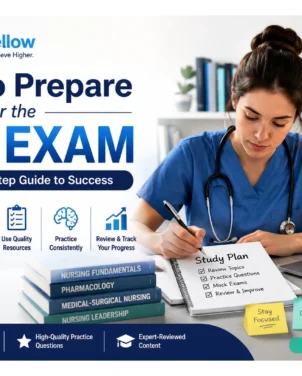

Preparing for the California Alarm Company Qualified Manager Exam requires more than simply reading through a licensing manual and hoping the important information sticks. Candidates need to understand the knowledge areas being tested, organize their preparation, practice applying what they learn, and develop enough confidence to make accurate decisions under exam conditions.
For professionals working toward a qualified manager role in California’s alarm industry, the examination represents an important step in demonstrating the knowledge needed to oversee alarm-related operations responsibly. Because the subject matter can cover technical, operational, regulatory, and business-related concepts, studying without a clear strategy can quickly become overwhelming.
The good news is that a structured approach can make the process much more manageable. Instead of trying to memorize everything at once, successful preparation involves breaking the material into logical sections, identifying weaker areas, practicing regularly, and reviewing mistakes carefully.
This guide explains practical ways to prepare for the California Alarm Company Qualified Manager Exam, how to organize your study time, what types of knowledge deserve attention, and how practice questions can help you identify gaps before test day.
What You’ll Learn in This Guide
- ✔ How to organize your exam preparation
- ✔ Why understanding the tested subject areas matters
- ✔ How to build an effective study schedule
- ✔ Why practice questions should be part of your routine
- ✔ How to identify and fix weak areas
- ✔ Common preparation mistakes to avoid
- ✔ How to approach the final days before the exam
Start by Understanding What You’re Preparing For
One of the first mistakes candidates make is starting with random study materials without developing an overall understanding of the examination. Before spending hours reviewing individual topics, take time to understand the purpose of the qualification and the responsibilities associated with managing an alarm company operation.
A qualified manager needs more than narrow technical knowledge. The role can involve understanding industry practices, regulatory responsibilities, company operations, personnel, customer service, and the proper handling of alarm-related work.
Understanding the broader purpose of the examination gives you context for the material you encounter during your preparation.
Build Your Preparation Around Major Knowledge Areas
Rather than treating your study material as one enormous collection of information, divide it into smaller knowledge categories. This makes it easier to establish priorities and track your progress.
| Study Area | Preparation Goal |
|---|---|
| Industry knowledge | Understand fundamental alarm company practices and terminology. |
| Regulatory requirements | Review applicable California rules and professional responsibilities. |
| Business operations | Understand concepts related to managing an alarm company. |
| Technical concepts | Strengthen knowledge of alarm systems and related principles. |
| Professional responsibilities | Understand proper conduct, supervision, and operational accountability. |
The exact content you should prioritize should always be based on the current official examination information and source materials. Requirements and testing policies can change, so candidates should verify current information before finalizing their study plan.
Create a Realistic Study Schedule
A study schedule gives your preparation structure and prevents you from spending too much time on one subject while neglecting another. This is especially important for candidates who are working while preparing for the examination.
You don’t necessarily need to study for several hours every day. Consistency is often more useful than occasional long sessions.
| Preparation Period | Recommended Focus |
|---|---|
| Week 1 | Review the exam requirements and establish your baseline knowledge. |
| Week 2 | Study core industry and regulatory concepts. |
| Week 3 | Review technical and operational subjects. |
| Week 4 | Work through practice questions and identify weak areas. |
| Week 5 | Concentrate on difficult subjects and review mistakes. |
| Final week | Complete focused review and timed practice sessions. |
You can shorten or extend this schedule depending on your experience, available study time, and familiarity with the examination material.
Use Active Learning Instead of Reading Everything Repeatedly
Simply reading the same pages several times can create the impression that you know the material without actually testing whether you can recall and apply it.
Active learning techniques make your preparation more effective. After studying a topic, close your notes and explain the main concept in your own words. Ask yourself what the rule means, when it applies, and how it might appear in a practical situation.
Useful techniques include:
- Creating concise study notes.
- Using flashcards for terminology and important facts.
- Explaining difficult concepts aloud.
- Answering practice questions after each study session.
- Keeping a list of frequently missed subjects.
- Reviewing incorrect answers instead of simply checking your score.
Why Practice Questions Matter
Practice questions allow you to move from passive studying to active application. They can reveal whether you actually understand a concept or have only become familiar with the wording in your study materials.
Regular question practice can help you develop several useful skills:
- Recognizing important information in a question.
- Distinguishing relevant details from distractions.
- Applying rules and concepts to practical scenarios.
- Eliminating incorrect answer choices.
- Managing your time during a testing session.
- Identifying knowledge gaps before exam day.
Study TipDon’t treat a practice-question score as the final measure of your ability. The explanation behind each question can be just as valuable as the question itself. Review both correct and incorrect responses to understand the reasoning.
Keep a List of Your Weakest Topics
One of the simplest ways to improve your preparation is to track the subjects that repeatedly cause problems. If you miss questions involving the same concept several times, don’t simply move on to the next section.
Create a short “weak areas” list and revisit it throughout your preparation.
Your list might include:
- Terms or definitions you frequently confuse.
- Regulatory concepts that require additional review.
- Technical subjects that are unfamiliar.
- Questions involving operational responsibilities.
- Topics where you consistently choose between two similar answers.
As your preparation progresses, update the list. Topics that become comfortable can be removed, while persistent problem areas should receive additional attention.
Don’t Depend on Last-Minute Cramming
Trying to learn the entire examination syllabus during the final few days can create unnecessary stress and make it difficult to retain information. A better approach is to distribute your preparation across multiple weeks.
Spaced review gives you repeated exposure to important concepts and allows you to return to difficult material after you’ve had time to process it.
Even a short daily study session can become valuable when maintained consistently over several weeks.
Real-World Example: Preparing Around a Full-Time Job
Consider a candidate who works full time for an alarm company and has limited weekday study time. Instead of waiting for an entire free weekend, the candidate creates a routine of 45 minutes of focused study after work and uses one longer weekend session for practice questions.
During the first few weeks, the candidate concentrates on learning the material. Later, the focus gradually shifts toward practice questions and reviewing mistakes.
This approach makes preparation more manageable because studying becomes part of the weekly routine rather than an activity postponed until the examination date is approaching.
Stay Focused on Understanding, Not Just Memorization
Memorizing important information has a place in exam preparation, particularly when dealing with terminology, requirements, and specific facts. However, understanding how concepts work together gives you a stronger foundation.
When reviewing a topic, ask yourself:
- What does this concept mean?
- Why is it important?
- When would it apply?
- How could it affect an alarm company operation?
- Could I explain this concept without looking at my notes?
If you can answer these questions confidently, you’re moving beyond memorization toward genuine understanding.
How to Make Your Study Sessions More Effective
Preparing for the California Alarm Company Qualified Manager Exam doesn’t mean spending every available hour studying. The quality of your study sessions matters just as much as the amount of time you spend with the material.
Before each session, choose one or two specific objectives. For example, you might spend one session reviewing regulatory concepts and another working through questions related to alarm company operations. Having a defined goal makes it easier to stay focused and measure your progress.
A productive study session can follow a simple pattern:
- Review a specific subject for 20–30 minutes.
- Write down the most important concepts in your own words.
- Answer a set of practice questions.
- Review every incorrect response.
- Add unfamiliar concepts to your weak-topic list.
This cycle combines learning, recall, application, and review instead of relying entirely on passive reading.
Learn How to Approach Scenario-Based Questions
Some exam questions may present information in a practical situation rather than asking for a simple definition. These questions require you to identify the relevant facts and determine which principle or responsibility applies.
When you encounter a longer question, avoid rushing toward the answer choices. First identify what the question is actually asking.
- What is the primary issue?
- Which details are relevant?
- Is the question testing knowledge, judgment, or procedure?
- Which answer directly addresses the situation?
- Are any choices clearly inconsistent with the applicable requirements?
Developing this habit can make difficult questions easier to analyze and can reduce the likelihood of choosing an answer simply because it sounds familiar.
Review California-Specific Requirements Carefully
Because this is a California-specific qualification, candidates should pay particular attention to information that applies specifically to alarm company operations within the state. General industry knowledge may provide useful background, but it should not replace reviewing the current California requirements and official examination information.
Keep your preparation focused on authoritative and current sources. Regulations, licensing procedures, application policies, and examination information can change, so relying on outdated material can create unnecessary confusion.
Important Preparation ReminderAlways compare your study materials with the latest official California licensing and examination information. If a requirement or policy has changed, the current official source should take priority over older review materials.
Use Practice Tests to Identify Knowledge Gaps
Practice tests are particularly useful once you’ve established a basic understanding of the subject matter. They provide an opportunity to test your recall while also showing which areas require additional review.
After completing a practice session, don’t simply record your percentage and move on. Categorize the questions you missed.
| Result | What to Do Next |
|---|---|
| Didn’t know the concept | Return to the relevant study material and learn the subject. |
| Misread the question | Practice slowing down and identifying key information. |
| Confused two concepts | Compare them side by side in your notes. |
| Changed a correct answer | Review your reasoning and avoid second-guessing without evidence. |
| Ran out of time | Complete more timed question sets. |
This turns every practice session into a targeted learning opportunity.
Build a Weekly Review Routine
Weekly review prevents previously studied information from disappearing as you move on to new topics. Set aside time at the end of each week to revisit your notes and practice questions.
A simple weekly review could include:
- Reviewing your weakest subjects.
- Revisiting questions you previously missed.
- Testing yourself without looking at your notes.
- Updating your study checklist.
- Completing a timed practice session.
Regular review also makes it easier to recognize whether your preparation is improving over time.
Common Mistakes That Can Hurt Your Preparation
1. Studying Without a Schedule
Without a defined plan, it’s easy to spend too much time on familiar subjects while neglecting areas that need improvement.
2. Using Outdated Information
California licensing and regulatory information can change. Always verify important requirements against current official sources.
3. Memorizing Without Understanding
Memorization can help with specific facts, but understanding the underlying concept makes it easier to handle questions presented in unfamiliar ways.
4. Ignoring Incorrect Answers
A missed question is useful feedback. Failing to review the reason for the mistake means losing one of the most valuable learning opportunities in your preparation.
5. Taking Practice Tests Only at the End
Waiting until the final days to use practice questions gives you less time to identify and correct weaknesses.
6. Cramming the Night Before
Last-minute studying can increase anxiety and leave you mentally exhausted. Aim to enter the examination rested and prepared rather than overwhelmed by additional material.
How to Know When Your Preparation Is Improving
Your progress shouldn’t be measured only by a single practice-test score. Look for several indicators that your understanding is becoming stronger.
- You can explain important concepts without referring to your notes.
- You recognize unfamiliar terminology more quickly.
- You make fewer repeated mistakes.
- You can eliminate clearly incorrect choices more confidently.
- You are improving your performance on timed question sets.
- You can identify why an answer is correct rather than simply remembering it.
These improvements indicate that you’re developing knowledge and test-taking skills rather than simply memorizing answer patterns.
Balance Preparation With Your Professional Responsibilities
Many candidates preparing for a qualified manager examination are already working in the alarm industry. Trying to study for several hours after an exhausting workday isn’t always productive.
Instead, create a sustainable routine. Short, focused sessions during the week combined with a longer review session on a day off can provide enough repetition without making preparation feel impossible.
If you miss a study session, don’t abandon the entire schedule. Simply adjust your plan and continue with the next session.
Consistency Beats CrammingA realistic study routine that you can maintain for several weeks is usually more useful than an ambitious schedule that lasts only a few days.
Prepare With Realistic Exam-Style Practice
As your knowledge improves, incorporate more practice questions into your routine. The goal isn’t simply to achieve a high score; it’s to become comfortable applying what you’ve learned and recognizing areas that still need attention.
Using a dedicated California Alarm Company Qualified Manager exam question bank can give your preparation a more structured practice component while helping you evaluate your understanding before test day.
Create a Final-Week Review Strategy
The final week before the California Alarm Company Qualified Manager Exam should be used to reinforce your existing knowledge rather than attempting to learn an entirely new body of material.
At this stage, review the topics that have caused the most difficulty throughout your preparation. Revisit your missed practice questions, condensed notes, important terminology, and concepts that you have repeatedly confused.
A practical final-week routine might look like this:
| Day | Recommended Focus |
|---|---|
| Day 7 | Review major subject areas and identify final weak points. |
| Day 6 | Review regulatory and professional responsibilities. |
| Day 5 | Review technical and operational concepts. |
| Day 4 | Complete a timed practice question session. |
| Day 3 | Review incorrect answers and difficult subjects. |
| Day 2 | Perform a concise comprehensive review. |
| Day 1 | Rest, review only essential notes, and prepare for exam day. |
You can adjust this schedule according to your own preparation timeline. The important point is to enter the final days with a clear focus rather than trying to study everything again from the beginning.
How to Approach Difficult Questions on Exam Day
Even well-prepared candidates will encounter questions they don’t immediately know how to answer. The goal isn’t to know every answer instantly. Instead, use a systematic approach when you encounter uncertainty.
- Read the entire question carefully.
- Identify exactly what the question is asking.
- Separate important facts from unnecessary information.
- Eliminate answers that clearly don’t fit the situation.
- Compare the remaining choices carefully.
- Select the answer that best addresses the question.
- Move forward rather than spending excessive time on one difficult item.
This approach can help prevent anxiety from affecting your performance and allows you to use your available testing time efficiently.
Don’t Change Answers Without a Good Reason
Second-guessing can become a problem when candidates change an answer simply because they become nervous. If your original choice was based on sound reasoning, don’t change it merely because another option suddenly looks attractive.
However, if you notice that you misread the question or overlooked an important detail, changing your answer may be appropriate. The key is to base the decision on evidence from the question rather than anxiety.
Get Familiar With Your Testing Logistics
Good preparation includes more than studying the subject matter. Confirm your examination appointment, review the current testing instructions, and understand what identification or other materials you may need to bring.
Knowing where you’re going and what to expect can eliminate avoidable distractions on examination day.
What to Do the Night Before the Exam
The night before the examination is not the time for an all-night study session. Staying awake for hours trying to memorize additional information can leave you tired when concentration matters most.
Instead:
- Review only concise notes or difficult concepts.
- Stop intensive studying early enough to relax.
- Prepare your identification and other required items.
- Confirm your route or testing arrangements.
- Get adequate sleep.
- Start the morning with enough time to avoid rushing.
A rested mind is better positioned to analyze questions and make careful decisions.
Track Your Progress Before Scheduling the Exam
Your readiness should be based on more than one practice-test score. Look at your performance across multiple sessions and pay attention to whether your weaknesses are becoming less frequent.
Consider yourself on a stronger preparation path when you can:
- Consistently explain important concepts in your own words.
- Recognize the purpose behind common industry and regulatory requirements.
- Work through unfamiliar questions without immediately guessing.
- Identify why incorrect choices are wrong.
- Maintain a steady pace during timed practice.
- Demonstrate improvement across repeated practice sessions.
If the same subjects continue to cause difficulty, use those results to guide another focused review instead of simply taking more tests.
Use Practice Testing as the Final Preparation Step
As you get closer to the examination, realistic practice can help bring together everything you’ve studied. A dedicated practice environment allows you to work through questions, review explanations, and identify remaining knowledge gaps before the actual test.
For candidates ready to put their preparation into practice, California Alarm Company Qualified Manager practice questions can provide an additional way to assess your knowledge and reinforce important concepts before exam day.
Ready to Test Your Knowledge?
Once you’ve reviewed the core material, don’t leave your readiness to guesswork. Use practice sessions to discover what you know, identify what still needs work, and become more comfortable answering questions under test conditions.
Strengthen your California Qualified Manager exam preparation with focused practice designed to help you review key concepts and build confidence before the examination.
Keep Your Preparation Focused and Practical
The most effective preparation strategy isn’t necessarily the one with the largest number of study hours. It’s the strategy that combines accurate source material, consistent review, active recall, practice questions, and careful analysis of mistakes.
If you’re balancing work with exam preparation, create a schedule you can realistically maintain. Even a focused daily session can produce substantial progress when you remain consistent over several weeks.
Final Thoughts
Passing the California Alarm Company Qualified Manager Exam requires preparation, consistency, and a clear understanding of the material you’re expected to know. Starting early gives you time to identify weaknesses, review difficult concepts, and develop confidence through repeated practice.
Don’t rely entirely on memorization or last-minute studying. Break the material into manageable sections, use active learning techniques, practice regularly, and learn from every incorrect answer.
Most importantly, make sure your preparation is based on current official California requirements and examination information. Regulations and testing policies can change, so verifying the latest information should always be part of your preparation process.
With a structured study plan and deliberate practice, you can walk into the examination better prepared, more confident, and ready to apply what you’ve learned.
Frequently Asked Questions
How should I prepare for the California Alarm Company Qualified Manager Exam?
Start by reviewing the current examination and licensing information, organize the subject matter into manageable sections, create a realistic study schedule, and use practice questions to identify areas that need additional review.
How early should I start studying?
The ideal preparation period depends on your existing knowledge, professional experience, and available study time. Starting early gives you more flexibility to review difficult subjects without relying on last-minute cramming.
Are practice questions useful for this examination?
Yes. Practice questions can help you apply what you’ve studied, identify knowledge gaps, become familiar with different question scenarios, and improve your ability to work under timed conditions.
What should I do if I keep missing questions about the same topic?
Return to the underlying concept rather than simply memorizing the correct answer. Review the relevant material, explain the concept in your own words, and then attempt similar questions again.
Should I study the night before the exam?
A brief review can be useful, but avoid intensive late-night studying. Preparing your exam-day materials and getting adequate rest can help you arrive focused and ready.