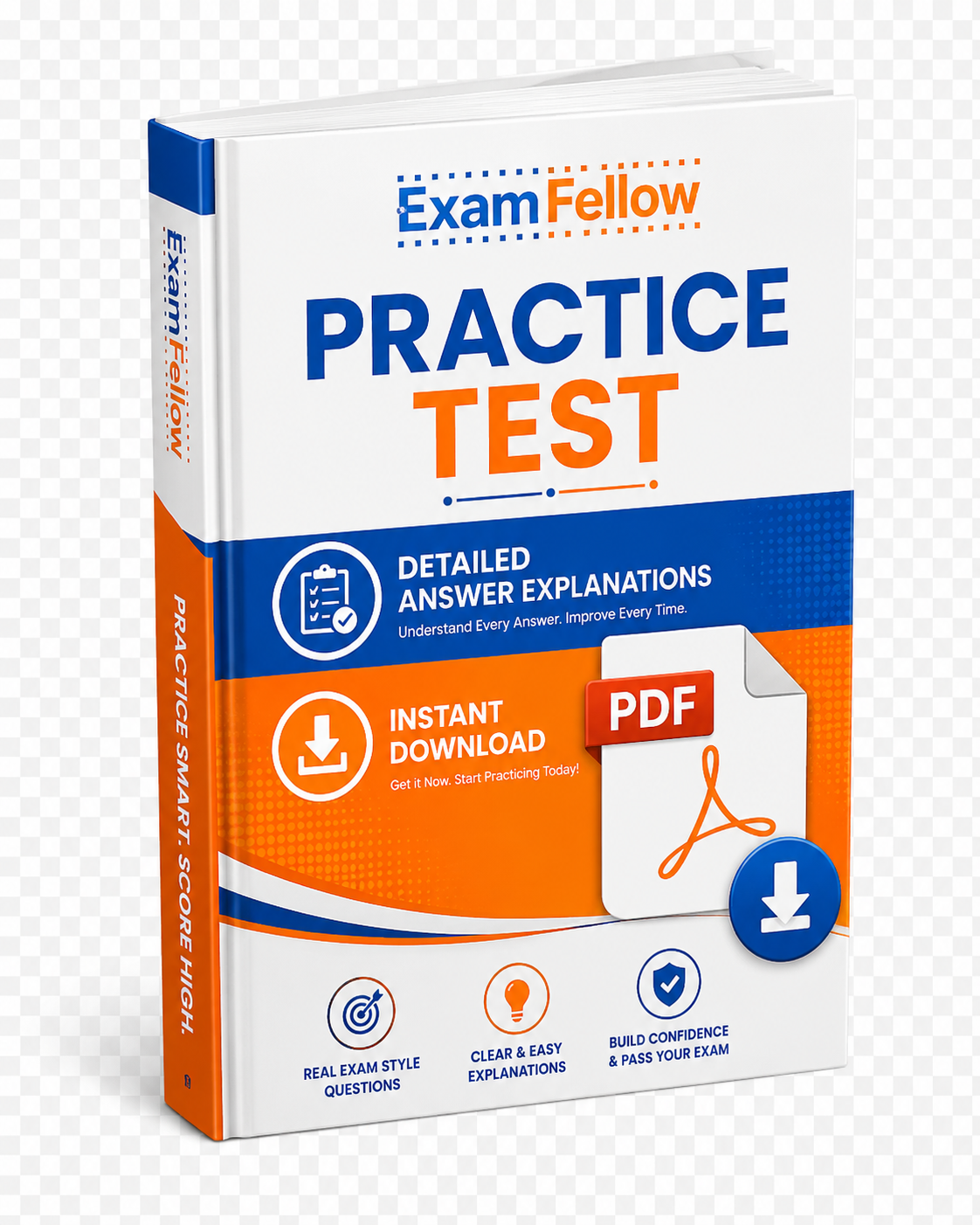
RHIA Practice Test

✓ 850 Practice Questions with Explanations

$29.99

Sample Questions and Answers

Question 1: What is one of the primary responsibilities of a Registered Health Information Administrator (RHIA)?

A. Performing surgical procedures.
B. Managing health information systems while ensuring data quality, privacy, compliance, and organizational efficiency.
C. Prescribing medications to patients.
D. Conducting laboratory testing.

Answer: B. Managing health information systems while ensuring data quality, privacy, compliance, and organizational efficiency.

Explanation: RHIA professionals oversee the management of health information throughout its lifecycle. Their responsibilities include maintaining accurate health records, ensuring regulatory compliance, improving information governance, supporting healthcare operations, and leading health information management initiatives. These leadership and administrative responsibilities are central to the RHIA certification exam.


Question 2: Why is information governance important in healthcare organizations?

A. It focuses only on storing paper medical records.
B. It establishes policies and processes that ensure health information is accurate, secure, accessible, and properly managed throughout its lifecycle.
C. It eliminates the need for electronic health records.
D. It applies only to insurance companies.

Answer: B. It establishes policies and processes that ensure health information is accurate, secure, accessible, and properly managed throughout its lifecycle.

Explanation: Information governance provides the framework for managing healthcare data responsibly. It promotes data quality, regulatory compliance, privacy, security, and appropriate access to health information. Effective information governance supports patient care, organizational performance, and legal compliance, making it a major topic on the RHIA certification exam.


Question 3: A healthcare organization identifies inconsistencies in patient documentation across multiple departments. What should an RHIA professional recommend first?

A. Ignore the inconsistencies if patient care is not affected.
B. Conduct a documentation review, identify the cause of the inconsistencies, and implement quality improvement measures.
C. Delete incomplete records immediately.
D. Delay documentation until additional staff are hired.

Answer: B. Conduct a documentation review, identify the cause of the inconsistencies, and implement quality improvement measures.

Explanation: RHIA professionals play an important role in improving documentation quality across healthcare organizations. Reviewing documentation processes, identifying recurring issues, and implementing corrective actions help improve data accuracy, coding quality, reimbursement, and patient safety. Quality improvement initiatives are a key responsibility for health information administrators.


Question 4: Why is healthcare data analytics valuable for healthcare organizations?

A. It is only used for insurance billing.
B. It helps organizations monitor performance, improve patient outcomes, support strategic decision-making, and meet regulatory reporting requirements.
C. It replaces clinical documentation.
D. It eliminates the need for quality improvement programs.

Answer: B. It helps organizations monitor performance, improve patient outcomes, support strategic decision-making, and meet regulatory reporting requirements.

Explanation: Healthcare data analytics transforms health information into meaningful insights that support operational planning, quality improvement, financial performance, population health initiatives, and patient care. RHIA professionals use data to evaluate organizational performance and guide evidence-based decision-making.


Question 5: Why should candidates complete RHIA practice exams before taking the certification test?

A. They guarantee a passing score.
B. They help reinforce knowledge, improve critical thinking, identify weak areas, and build confidence under exam conditions.
C. They replace official study materials.
D. They reduce the number of questions on the actual exam.

Answer: B. They help reinforce knowledge, improve critical thinking, identify weak areas, and build confidence under exam conditions.

Explanation: RHIA practice exams provide valuable experience with certification-style questions while helping candidates strengthen their understanding of health information management, leadership, compliance, and healthcare operations. Regular practice improves time management, increases confidence, and highlights areas requiring additional review, making it an essential part of an effective exam preparation strategy.

Question 6: A healthcare organization is preparing for a compliance audit. Which responsibility would most likely fall to an RHIA professional?

A. Prescribing medications to patients.
B. Reviewing health records for accuracy, completeness, and compliance with regulatory standards.
C. Performing diagnostic imaging procedures.
D. Scheduling patient appointments.

Answer: B. Reviewing health records for accuracy, completeness, and compliance with regulatory standards.

Explanation: RHIA professionals play a key role in ensuring healthcare organizations maintain accurate, complete, and compliant health records. Preparing for audits often involves reviewing documentation, verifying data integrity, identifying potential compliance issues, and implementing corrective actions. These responsibilities help organizations meet legal requirements and maintain high standards of health information management.


Question 7: Why is revenue cycle management important in health information management?

A. It only tracks employee payroll.
B. It supports accurate documentation, coding, billing, reimbursement, and the financial health of healthcare organizations.
C. It replaces medical coding responsibilities.
D. It applies only to private insurance companies.

Answer: B. It supports accurate documentation, coding, billing, reimbursement, and the financial health of healthcare organizations.

Explanation: Revenue cycle management connects clinical documentation, coding, billing, and reimbursement processes. RHIA professionals help ensure health information is accurate and complete so healthcare organizations can submit appropriate claims, receive timely reimbursement, and maintain regulatory compliance. Understanding revenue cycle processes is an important component of the RHIA certification exam.


Question 8: Which leadership skill is most important for a Registered Health Information Administrator?

A. Making decisions without reviewing available data.
B. Communicating effectively, managing teams, and using healthcare data to support organizational goals.
C. Avoiding collaboration with other departments.
D. Focusing only on coding activities.

Answer: B. Communicating effectively, managing teams, and using healthcare data to support organizational goals.

Explanation: RHIA professionals often lead health information departments and collaborate with clinical, administrative, and technical teams. Strong leadership, communication, problem-solving, and strategic planning skills help improve healthcare operations, data quality, and organizational performance. Leadership competencies are a significant focus of the RHIA certification examination.


Question 9: What is one of the primary benefits of maintaining high-quality healthcare data?

A. It reduces the need for provider documentation.
B. It supports patient safety, informed decision-making, quality improvement initiatives, regulatory reporting, and accurate reimbursement.
C. It guarantees insurance payment for every claim.
D. It eliminates healthcare compliance requirements.

Answer: B. It supports patient safety, informed decision-making, quality improvement initiatives, regulatory reporting, and accurate reimbursement.

Explanation: High-quality healthcare data is essential for effective patient care and organizational success. Accurate information supports clinical decisions, coding accuracy, reimbursement, public health reporting, quality measurement, and healthcare research. RHIA professionals help establish processes that ensure health information remains complete, accurate, and reliable throughout its lifecycle.


Question 10: Why is continuous professional development important for RHIA professionals?

A. It eliminates the need to follow healthcare regulations.
B. It helps professionals stay current with evolving healthcare technologies, regulations, leadership practices, and industry standards.
C. It guarantees executive-level employment.
D. It replaces practical work experience.

Answer: B. It helps professionals stay current with evolving healthcare technologies, regulations, leadership practices, and industry standards.

Explanation: Healthcare is constantly evolving through advances in technology, regulatory changes, reimbursement models, and information management practices. Continuing professional development enables RHIA professionals to strengthen their leadership abilities, improve organizational performance, maintain compliance, and provide effective management of health information systems throughout their careers.

Ready to Get Full Access?

Unlock all practice questions with detailed answer explanations.

$29.99

Description

The Registered Health Information Administrator (RHIA) certification is a highly respected credential for professionals pursuing leadership roles in health information management. RHIA-certified professionals are responsible for managing healthcare data, ensuring regulatory compliance, overseeing information governance, supporting revenue cycle operations, and improving the quality and security of health information systems. Earning the RHIA credential demonstrates your expertise in healthcare management, data analytics, privacy, and health information administration.

Our RHIA Practice Exam Questions and Answers are designed to help you prepare with realistic exam-style questions, detailed answer explanations, and comprehensive coverage of the topics commonly tested on the certification exam. Whether you’re taking the RHIA exam for the first time or preparing for a retake, this study resource helps strengthen your knowledge, improve critical thinking, and build confidence before exam day.


Why Choose Our RHIA Practice Exam?

Preparing for the RHIA certification exam requires more than memorizing healthcare terminology and regulations. Successful candidates must understand health information systems, information governance, leadership principles, data analysis, compliance requirements, reimbursement methodologies, and organizational management.

Our practice exam helps you:

  • Practice with realistic RHIA certification-style questions
  • Learn through detailed answer explanations
  • Strengthen your understanding of health information administration
  • Improve analytical thinking and decision-making skills
  • Reinforce healthcare compliance and data governance concepts
  • Identify weak areas for targeted review
  • Study online anytime at your own pace

Each question is designed to reflect the format and difficulty level of the RHIA certification exam while helping you apply your knowledge to real-world healthcare management scenarios.


Topics Covered

The RHIA Practice Exam provides comprehensive coverage of key certification domains, including:

  • Health information management
  • Information governance
  • Healthcare data analytics
  • Medical terminology
  • Anatomy and physiology
  • ICD, CPT, and HCPCS coding concepts
  • Revenue cycle management
  • Healthcare reimbursement methodologies
  • Electronic health records (EHR)
  • Privacy, security, and regulatory compliance
  • Leadership and organizational management
  • Quality improvement and performance measurement

These topics help develop the advanced knowledge and leadership skills expected of Registered Health Information Administrators.


Learn Through Detailed Answer Explanations

Every practice question includes a detailed explanation that goes beyond identifying the correct answer. You’ll learn the reasoning behind each response while reinforcing important concepts in health information management, healthcare compliance, leadership, coding, reimbursement, and data governance. This approach promotes long-term retention, improves critical thinking, and prepares you to apply your knowledge confidently in both the certification exam and professional practice.


Who Can Benefit from This Practice Exam?

This study resource is ideal for:

  • Students preparing for the RHIA certification exam
  • Graduates of health information management programs
  • Health information professionals seeking leadership roles
  • Healthcare administrators expanding their credentials
  • Candidates preparing for RHIA certification retakes
  • Professionals seeking additional exam practice

Whether you’re beginning your certification journey or advancing your healthcare management career, this practice exam provides structured preparation to help you achieve your professional goals.


Benefits of Regular Practice

Consistent practice helps you:

  • Become familiar with RHIA exam-style questions
  • Strengthen health information management knowledge
  • Improve leadership and decision-making skills
  • Reinforce healthcare compliance and regulatory concepts
  • Identify knowledge gaps before exam day
  • Improve confidence under timed testing conditions
  • Develop effective time management strategies
  • Reduce exam-related stress through realistic practice

Regular review allows you to measure your progress while strengthening the practical knowledge and administrative skills required for success as a Registered Health Information Administrator.


Flexible Learning That Fits Your Schedule

Preparing for the RHIA exam while balancing work, education, or family responsibilities can be challenging. Our self-paced RHIA Practice Exam allows you to study whenever it’s most convenient. Review detailed explanations, revisit difficult topics, and complete practice questions as often as needed to maximize your preparation and exam readiness.


Take the Next Step Toward RHIA Certification Success

Earning your Registered Health Information Administrator (RHIA) credential can open the door to rewarding leadership opportunities in healthcare and health information management. Our RHIA Practice Exam Questions and Answers provide realistic exam-style questions, comprehensive explanations, and focused review to help you prepare with confidence and perform at your best on exam day.

Start practicing today and take the next step toward achieving your RHIA certification and advancing your healthcare career.

Ready to Pass Your Exam?

Get instant access to all practice questions and detailed explanations.

$29.99

Reviews

There are no reviews yet.

Be the first to review “RHIA Practice Test”

Your email address will not be published. Required fields are marked *

FAQs

How can the RHIA Practice Exam improve my chances of passing the certification exam?
The RHIA Practice Exam helps you become familiar with the structure and difficulty of the certification exam while reinforcing key concepts in health information management, leadership, compliance, and healthcare operations. Regular practice also helps you identify weak areas, improve time management, and build confidence before test day.
What subjects are covered in the RHIA Practice Exam?
The practice exam covers essential RHIA exam topics, including health information management, information governance, data analytics, healthcare reimbursement, revenue cycle management, electronic health records (EHR), privacy and security, leadership, quality improvement, healthcare regulations, and organizational management.
Are the RHIA practice questions based on real healthcare management scenarios?
Yes. Many questions are scenario-based and designed to reflect situations commonly encountered by health information administrators. These questions help you apply your knowledge, strengthen decision-making skills, and prepare for both the certification exam and leadership roles within healthcare organizations.
Why are detailed answer explanations included with every RHIA practice question?
Detailed explanations help you understand the reasoning behind each correct answer rather than simply memorizing facts. They reinforce key concepts, clarify complex health information management topics, and improve long-term retention, making your study sessions more effective.
Who should use the RHIA Practice Exam Questions and Answers?
This practice exam is ideal for students enrolled in accredited health information management programs, recent graduates, professionals preparing for the RHIA certification exam, healthcare managers seeking career advancement, and candidates who want additional practice before taking the official exam.